
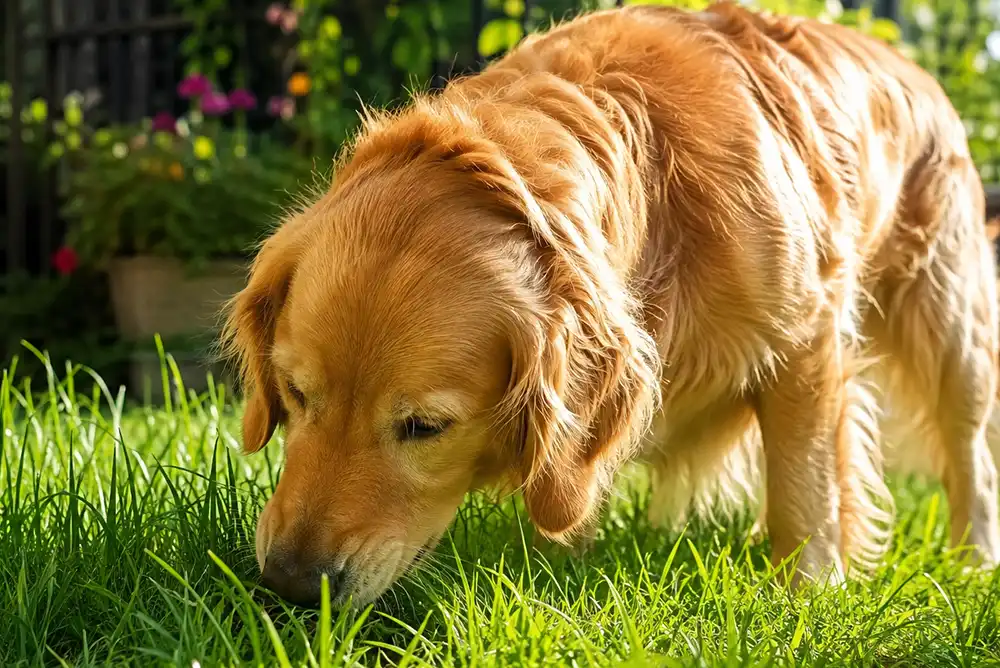
If you are constantly asking yourself why is my dog eating grass, you are not alone. Munching on green lawn grass is one of the most common and puzzling behaviors pet parents see every day. Watching your dog swallow long blades of grass—only to vomit it back up—can definitely be alarming.
You might worry that your dog is sick, missing nutrients in their diet, or simply bored out of their mind. Watching them swallow long blades of grass—only to vomit it back up on your living room rug a few minutes later—can definitely be alarming.
The first time I saw my dog frantically eating grass in the backyard, I got really worried and thought something was wrong. But after keeping an eye on him for a few weeks, I noticed it usually happened on days when he had eaten his breakfast way too quickly.
The truth is that grass-eating (known scientifically as pica when non-food items are consumed) is usually completely normal canine behavior. Most dogs do it occasionally without any negative side effects. However, there are times when it points to an underlying stomach issue, dietary gap, or behavioral trigger.
In this comprehensive guide, we will break down the real reasons dogs eat grass, clear up common myths, and explain the exact signs that mean it is time to call your veterinarian.
Table of Contents
Quick Summary Table & Major Causes
At-a-Glance: Why Do Dogs Eat Grass?
| Common Reason | Is It Harmful? | Key Sign to Watch For |
| Upset Stomach / Nausea | Mild (if occasional) | Sudden, frantic grass eating followed by yellow foam/vomit |
| Dietary Fiber Need | Not Harmful | Slow, selective nibbling on specific fresh grass patches |
| Boredom or Instinct | Not Harmful | Casual chewing while playing or hanging out in the yard |
| Pesticide / Chemical Hazard | Dangerous | Drooling, diarrhea, or lethargy after eating treated grass |
Real Reasons Why Is My Dog Eating Grass
1. Natural Instinct from Wild Ancestors
Before dogs ate neatly processed kibble out of a bowl, their wild ancestors (like wolves) ate every part of their prey, including the plant material inside an herbivore’s stomach.
Pet parents often ask why is my dog eating grass when their wild ancestors used forage plants for digestion and parasite control.
Additionally, wild dogs frequently forage on wild berries, plants, and grass to clear out internal parasites or add variety to their natural diet. Your dog’s urge to chew grass is often just an old, hardwired survival instinct.
2. Soothing an Upset Stomach or Nausea
If a dog feels bloated, gassy, or nauseous, they will often look for grass to induce vomiting. Fresh grass blades tickle the sensitive lining of their stomach and throat. This physical tickle triggers a natural gag reflex, helping them throw up the gas, bile, or bad food that was making them uncomfortable.
Whenever my dog gets into the trash and eats something greasy, I know what’s coming. The next morning, he usually heads straight to the yard, starts chewing on thick blades of grass, and sometimes ends up throwing up bile.
3. Lack of Fiber in Their Daily Diet
Grass is packed with roughage and natural fiber. If your dog’s current food lacks sufficient dietary fiber, they may crave grass to help their digestive system process food smoothly and maintain regular bowel movements.
Additional Causes & Critical Danger Signs
4. Boredom and Anxiety
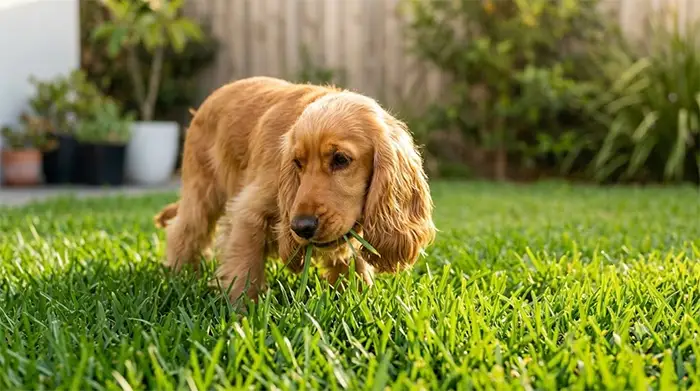
Just like humans bite their nails when they are stressed or bored, dogs often chew grass to pass the time. If your dog spends long hours alone in the backyard with few toys or little exercise, munching on grass becomes an easy way to burn off restless energy.
5. They Simply Enjoy the Taste and Texture
Many dogs chew grass simply because it tastes good to them! Fresh, young grass in the spring is sweet and full of moisture. You might notice your dog selectively picking only the tender, green sprouts instead of gulping down large clumps.
6. Stress and Anxiety Relief
Just like humans bite their nails when anxious, dogs engage in repetitive chewing behaviors—like frantic grazing—to soothe themselves during stressful situations.
7. Scavenging for Missing Micronutrients
If a dog’s diet lacks certain raw enzymes or minerals, they may instinctively turn to living plants and grass to supplement those missing dietary elements.
Related Guide: Can Dogs Eat Bananas? 5 Amazing Benefits & Risks
When Is Eating Grass Dangerous? (Red Flags to Watch)
While eating plain grass is generally safe, the environment surrounding the grass can pose real health risks. Here are the warning signs that mean you should take action immediately:
1. Toxic Lawn Chemicals and Pesticides
Fertilizers, weed killers, and insecticides sprayed on lawns are toxic to pets. If your dog eats grass that was recently chemically treated, they can suffer severe poisoning. Safety is critical when analyzing why is my dog eating grass near sprayed yards.
2. Intestinal Parasites
Public parks and shared lawns are frequent spots for neighborhood dogs to go to the bathroom. Piles of fecal matter leave behind microscopic parasite eggs (like roundworms and hookworms) on grass blades, which your dog can swallow.
I never let my dog eat grass at the dog park because I have no idea what might have been sprayed on it. If he wants to nibble on grass, I only let him do it in our backyard, where I know exactly what’s been used on the lawn.
3. Symptoms That Require an Immediate Vet Visit
If your dog shows any of these symptoms alongside grass eating, call your vet right away:
- Vomiting repeatedly for more than 24 hours.
- Severe diarrhea or blood in their stool.
- Extreme tiredness, weakness, or loss of appetite.
- Excessive drooling and pale gums.
How to Stop Grass Eating & FAQs
How to Safely Stop Your Dog From Eating Grass
If your dog is eating grass too frequently or you want to prevent them from eating chemically treated lawns, here are a few simple strategies to stop the habit:
1. Increase Dietary Fiber and Steamed Veggies
Try switching to a high-fiber kibble or adding a small spoon of plain canned pumpkin (not pie mix) or steamed green beans to their daily meals. Adding natural fiber satisfies their craving for roughage.
2. Add Mental Stimulation and Interactive Toys
If boredom is the root cause, keep your dog occupied. Use puzzle toys, snuffle mats, or long-lasting chew treats when they are in the yard to divert their attention away from the lawn. Mental stimulation helps when asking why is my dog eating grass constantly in the yard.
Whenever I notice my dog munching on grass just because he’s bored, I usually grab his favorite fetch toy or give him a KONG filled with peanut butter. That’s normally enough to get his attention off the grass and keep him busy.
3. Grow a Safe Pet-Grass Tray at Home
If your dog simply loves the taste of fresh greens, buy an indoor wheatgrass or oat grass kit designed specifically for pets. This gives them a clean, pesticide-free option to chew on safely. Buying safe greens solves the issue of why is my dog eating grass from untreated yards.
Related Guide: Can Dogs Eat Watermelon? 5 Amazing Safe Benefits & Serving Guide
Frequently Asked Questions (FAQ)
Should I let my dog eat grass if they are acting fine?
Yes, as long as the grass is completely free of toxic fertilizers, pesticides, and animal waste. Occasional grazing in your own private yard is a natural behavior and generally harmless. Many first-time owners worry about why is my dog eating grass, but it is usually a harmless behavior unless accompanied by lethargy.
Why does my dog eat grass frantically and then throw up yellow foam?
Frantic grass eating followed by throwing up yellow liquid (bile) usually means your dog had an empty or irritated stomach. The grass tickles their stomach lining, causing them to vomit up the excess bile to feel better. Stomach acid explains why is my dog eating grass before throwing up yellow liquid.
Can eating grass cause a bowel blockage in dogs?
Normally no, but if a dog eats massive clumps of long, tough dirt roots or dry weeds, it can form a wad in their intestines. Always supervise your dog and stop them from swallowing dirt or roots.
Conclusion: Understanding Your Dog’s Habit
At the end of the day, seeing your dog eat grass can be confusing, but in most cases, it is a completely natural and harmless behavior. Whether they are satisfying a primitive instinct, looking for a bit of extra fiber, or just passing the time on a sunny afternoon, a few mouthfuls of clean lawn grass won’t hurt them. Now that you know the main reasons behind why is my dog eating grass, you can easily keep your pet safe and comfortable at home.
The key is to pay attention to how they are eating it and how they act afterward. As long as your dog is energetic, eating their regular meals, and only eating clean, untreated grass, you can relax. Just keep an eye out for frantic grazing or sudden vomiting, and always ensure your lawn is free from dangerous garden chemicals.
Overall, I stopped worrying so much about my dog eating grass once I knew our yard was completely chemical-free and made sure he was getting a balanced diet with enough fiber. Knowing why is my dog eating grass gives you total peace of mind as a pet parent.





Leave a Reply