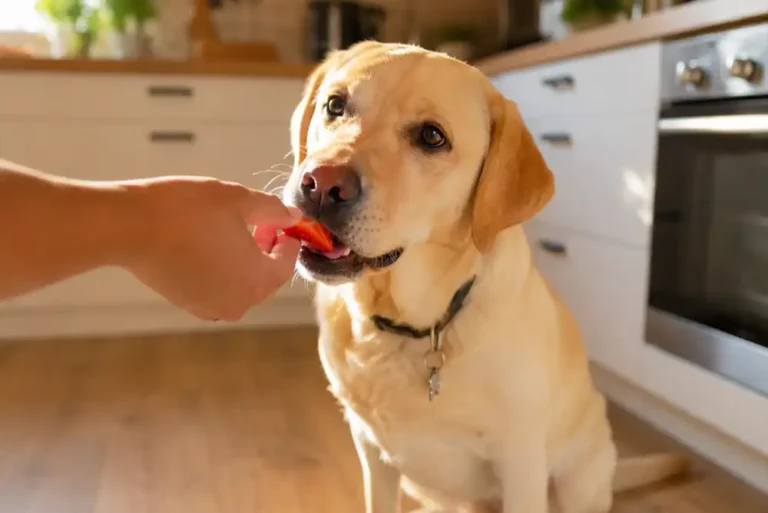


Can dogs eat watermelon rind? Short answer: Nope, skip the rind. That green skin and the white layer under it are tough, stringy and hard on a dog’s digestive system. Best case, you get an upset stomach. Worst case, it’s a choking scare or a blockage that needs a vet. The juicy pink part, though? That’s a fine summer treat once the rind and seeds are gone.
You know the scene. It’s 90 degrees out, you’re slicing up a watermelon on the back porch, and your dog is parked two inches from your elbow, giving you the look. You toss a piece over without thinking. Gulp. It’s gone, rind and all.
Now you’re standing there wondering if you just made a mistake. Take a breath. Let’s walk through whether dogs can eat watermelon rind, what’s actually safe, what isn’t, what to do if your dog already swallowed some rind, and how to turn watermelon into a treat your dog will lose its mind over, the safe way.
Everything below comes from what veterinary sources actually say (we’ve linked them as we go, so you can check our work). We’re pet writers and researchers, not vets, so when something sounds worrying, your own vet gets the final say.
Table of Contents
Rind vs. skin vs. seeds, at a glance
“Rind” and “skin” get used interchangeably, so here’s the breakdown. None of the vet-backed pages we read carve out a “safe” part of the rind, not even the white layer people ask about. They just say take it all off. We’re going to keep it that simple, too.
| Part of the watermelon | OK for dogs? | The reason |
|---|---|---|
| Pink/red flesh (seeds out) | Yes, in small amounts | About 92% water, low calorie, with vitamins A, B6 and C plus potassium |
| Green outer skin | No | Tough and hard to digest. Choking and blockage risk |
| White inner rind | No | Fibrous, same problems as the skin |
| Black or brown seeds | Better to avoid | Choking risk, and a pile of them can add up to a blockage |
| Seedless melon | The smarter pick | Those soft white seed coats are less likely to cause trouble, but pick out what you can |
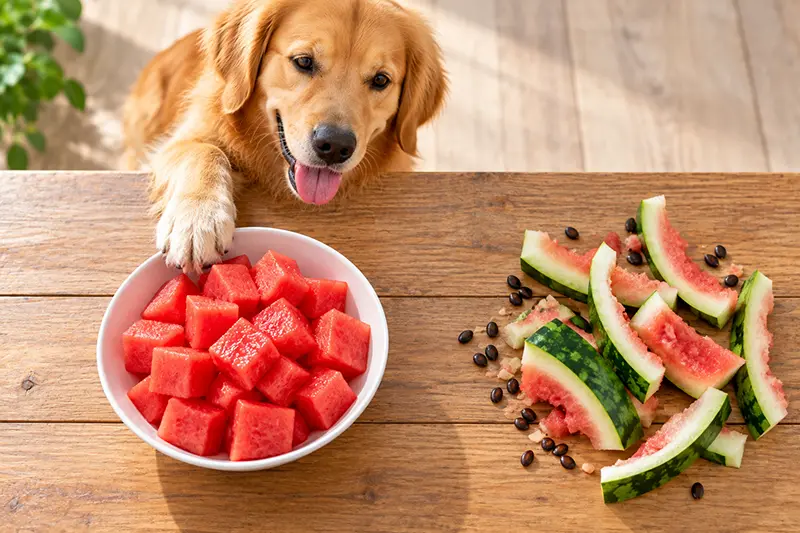
Why watermelon rind is a problem for dogs
Here’s something that surprises people: watermelon rind isn’t toxic. Nothing in it will poison your dog. The issue is purely about texture, and it comes down to a few things.
It’s seriously hard to digest
The American Kennel Club says rind is hard for dogs to digest and can lead to an upset stomach, vomiting, diarrhea, or an obstruction when a dog eats large pieces. MetLife Pet Insurance goes even further and calls it too tough for a dog’s digestive system to break down.
It can get stuck on the way down
According to PetMD (reviewed by Jennifer Coates, DVM), rind can be a choking hazard or cause an intestinal blockage. And let’s be honest, plenty of dogs don’t chew. They inhale. That’s what makes a hunk of rind a real gamble.
A blockage is no joke
A blockage means something’s stuck in the digestive tract and food can’t get through. It can turn into an emergency, sometimes needing surgery. How worried you should be depends on the size of your dog and the size of the piece. A big chunk going into a Chihuahua is a different story than a thin sliver going into a Lab.
Your dog’s teeth take a hit, too
MetLife also points out that hard rind can be rough on teeth and gums. So it’s not a great chew toy either.
The outside of the melon is the dirtiest part
That skin has been sitting in dirt, getting handled at the store, and tossed around in a truck. Even a good rinse doesn’t make it an appealing snack. Washing the melon before you cut it is still smart, since your knife drags whatever’s on the outside into the juicy middle.
My dog already ate watermelon rind. Now what?
First, don’t panic. Plenty of dogs swallow a bit of rind and carry on like nothing happened. But since a blockage is serious, it’s worth being smart about it. This is general info, not a stand-in for your own vet’s advice.
- Pick up the rest. Make sure there’s no second helping.
- Size it up. How big was the piece compared with your dog? A big chunk plus a small dog is the combo to take most seriously.
- Call your vet. PetMD recommends contacting a vet if your dog swallows rind, especially if any tummy trouble shows up. A two-minute phone call beats a night of worrying.
- Keep watch for a day or two. Notice appetite, energy, vomiting and bathroom habits.
- Don’t try to make your dog throw up at home unless a vet tells you to.
Call your vet right away if you notice any of these. PetMD lists them as possible signs of a blockage:
- Vomiting
- Not wanting to eat
- Belly pain (whining, a hunched back, flinching when you touch their stomach)
- Weakness or being unusually sleepy
- Diarrhea, or straining to poop with nothing coming out
- Weight loss over time
If your dog seems very sick, can’t stop vomiting, or collapses, skip the phone call and head straight to the nearest emergency vet.
Are watermelon seeds dangerous?
Seeds get a scary reputation, so here’s the real deal. Both the AKC and PetMD recommend taking them out. The concerns are:
- Choking, which matters most for small dogs.
- Blockage, if a dog eats a lot of seeds.
- A trace of cyanide. PetMD does mention it, but says poisoning is considered highly unlikely.
PetMD also notes that a few seeds swallowed by accident are unlikely to cause problems. Call your vet if your dog eats a bunch of them or gets an upset stomach afterward. The easy fix? Buy seedless and pick out any stragglers.
The good stuff: why watermelon is a decent treat
Once the rind and seeds are gone, the pink part is a pretty great snack. The AKC says watermelon is about 92% water and has around 50 calories per cup. It also has vitamins A, B6 and C, plus potassium, and it’s naturally free of fat and cholesterol. On a hot day, that’s about as refreshing as it gets.
Just keep it in perspective. It’s a treat, not dinner. Your dog’s main nutrition should come from a complete and balanced dog food, and too much fruit can cause an upset stomach or diarrhea because of the natural sugar and fiber.
How much watermelon can a dog have?
Two simple rules cover most dogs:
- The 10% rule. Treats of every kind, watermelon included, should make up no more than 10% of your dog’s daily calories. The AKC and PetMD both say so.
- Think small. PetMD suggests pieces around 1 inch by 1 inch and about a quarter inch thick. Think a thin little square, not a wedge.
For a rough serving guide, PetMD suggests the following when you’re offering watermelon two to three times a week:
| Dog weight | Slices per serving |
|---|---|
| 2 to 10 lb | 2 to 3 |
| 11 to 20 lb | 3 to 4 |
| 21 to 50 lb | 3 to 4 |
| 51 to 90 lb | 4 to 5 |
| 91 lb and up | 5 to 6 |
Treat these as ballparks, not a prescription. When in doubt, start with one piece, wait to see how your dog’s tummy handles it, and go from there. MetLife’s advice lines up: one to two one-inch pieces for small dogs and two to three for bigger ones.
How to prep watermelon safely
- Wash the whole melon before you cut it.
- Slice off all the green skin and white rind. Toss it somewhere your dog can’t dig it out.
- Take out the seeds. Check seedless ones too.
- Cut into bite-size pieces that fit your dog’s size.
- Serve it chilled or frozen, and refrigerate whatever’s left.
Quick tip: Don’t leave a half-eaten melon on the counter, the floor or a picnic blanket. Most “my dog ate the rind” moments happen when a melon gets left within reach or a rind lands in an open trash can. A little cleanup habit saves a lot of stress.
Fun ways to serve watermelon
This is where watermelon gets fun. Flesh only, always.
- Frozen cubes. Freeze small chunks for a crunchy, cooling snack. Keep an eye on your dog while they eat, and keep the pieces small, since big frozen chunks are hard.
- Watermelon “pupsicles.” Blend the flesh, pour it into an ice cube tray, and freeze.
- Yogurt swirl. MetLife suggests mixing watermelon puree with plain, unsweetened yogurt and freezing it. Read labels carefully and avoid anything with artificial sweeteners, especially xylitol, which is toxic to dogs. If your dog ever gets into something with xylitol, call your vet or a poison hotline right away, like the ASPCA Animal Poison Control Center or the Pet Poison Helpline. (They may charge a consultation fee.)
- Puzzle toy filler. Press little pieces into a lick mat or treat toy to keep your dog busy for a while.
Skip anything that’s just watermelon-flavored, like candy, drinks and snacks. They often have artificial sugars and flavorings that aren’t meant for dogs.
Dogs who should sit this one out (or check with the vet first)
- Dogs with diabetes, obesity or sugar sensitivity. PetMD says these dogs may need to avoid watermelon because of its natural sugar.
- Dogs on a prescription or special diet. Always ask your vet before adding any new food.
- Puppies and very small dogs. Smaller mouths and stomachs mean piece size matters even more. Ask your vet what’s right for your pup.
- Gulpers. If your dog inhales everything, cut pieces smaller than you think you need and maybe skip the frozen chunks.
As with any new food, some dogs can have an allergic reaction. PetMD lists hives, itching, vomiting or diarrhea as signs. If you see any of them, stop feeding it and call your vet.
Myths vs. facts
| The myth | What the vet sources say |
|---|---|
| “Rind is just fiber, so it’s good for digestion.” | It’s too tough to break down and can cause blockages and upset stomachs. |
| “One watermelon seed will poison my dog.” | Seeds have only a trace of cyanide, and poisoning is considered highly unlikely. Choking and blockage are the real concerns. |
| “Frozen watermelon is always safe.” | Only if it’s rind-free, seed-free and cut small. Large frozen pieces can be a choking risk. |
| “It’s mostly water, so my dog can have as much as they want.” | Treats should stay under 10% of daily calories, and too much can cause diarrhea. |
Frequently asked questions
Can dogs eat watermelon rind?
It’s best not to. The rind is hard to digest and can cause an upset stomach, choking or an intestinal blockage. Stick to the seedless pink flesh.
Can dogs eat watermelon skin?
No. The green skin is part of the rind, so it carries the same risks. Cut all of it off.
Is watermelon rind toxic to dogs?
No, it isn’t poisonous. The danger is its tough texture, which can cause choking or a blockage.
What happens if a dog eats watermelon rind?
It depends on how much and how big your dog is. Some dogs are totally fine. Others vomit or get diarrhea, and a few end up with a blockage. Call your vet for advice and watch for vomiting, loss of appetite, belly pain or unusual sleepiness.
Can dogs eat watermelon seeds?
Better to avoid them. A few swallowed by accident probably won’t cause trouble, but lots of seeds can lead to a blockage. Seedless melon is the easier call.
Can puppies eat watermelon?
A tiny piece of seedless flesh as an occasional treat is okay for many puppies, but check with your own vet first. Every pup is different.
How often can I give my dog watermelon?
Think of it as an occasional treat. PetMD’s guide is two to three times a week in small portions, and all treats together should stay under 10% of daily calories.
Is frozen watermelon good for dogs in summer?
Yes, as long as it’s seedless, rind-free and cut small. Keep an eye on your dog while they munch.
The bottom line
So, can dogs eat watermelon rind? No. Watermelon can still be a great summer treat for your dog, as long as you hand over only the seedless pink flesh in small pieces. Toss the rind and skin, don’t leave a half-eaten melon lying around, and keep treats to a small slice of the diet. And if your dog does grab some rind? Call your vet, and watch for vomiting, belly pain, tiredness or a dip in appetite.
Keep reading: Can dogs eat watermelon? The full guide · Can dogs eat cucumbers? · Can dogs eat carrots?
Sources
- American Kennel Club: Can Dogs Eat Watermelon?
- PetMD: Can Dogs Eat Watermelon? (reviewed by Jennifer Coates, DVM)
- MetLife Pet Insurance: Can Dogs Eat Watermelon?
- ASPCA Animal Poison Control
- Pet Poison Helpline
How we put this together: we compared what the sources above say about watermelon rind, seeds and portions, and kept the points they agree on, written in our own words. This article is general information. It isn’t veterinary advice and can’t replace a visit to your own vet, who knows your dog’s health. Last checked October 2026.