
If you’ve ever caught your cat squinting (cat eye infection), pawing at her face, or sitting there with a watery eye, you know how quickly your mind jumps to the worst. I’ve been there. Eye problems in cats can be anything from a speck of dust to a real infection, and in the moment it’s hard to tell which one you’re dealing with.
The good news is that for mild symptoms, a few simple things at home can bring comfort while you figure out whether a vet visit is needed.
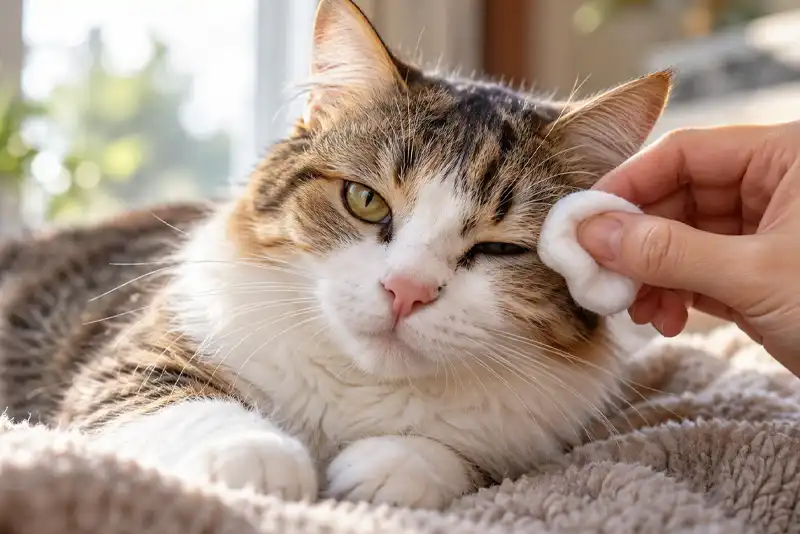
Start by washing your hands. Then soak a clean cloth or cotton pad in lukewarm water (not hot) and gently wipe away any crusty discharge from the corner of the eye, moving from the inside corner outward. Use a fresh pad for each eye so you don’t spread anything from one to the other. Be patient and soft with her. If she pulls away, stop and try again a little later.
It also helps to look at her surroundings. Dust, strong perfumes, cigarette smoke, and dirty bedding can all irritate a cat’s eyes, so wash her bedding and keep her favorite spots clean.
Just as important, know what not to do. Never use human eye drops, and don’t try home remedies like tea or herbal rinses. These can make things worse.
Keep a close watch for the next day or two. If the eye isn’t improving, or you notice any of these signs, call your vet right away:
- Yellow or green discharge
- Redness or swelling around the eye
- An eye she keeps tightly shut
- A cloudy look to the eye
- Lethargy, or not eating
Home care is only for mild cases. When you’re unsure, a quick call to your vet is always worth it, because eyes can get worse fast, and it’s better to be safe than sorry.
Table of Contents
Last year, Luna came home one evening with one eye watering and half-closed (cat eye infection), squinting like the light hurt her. My stomach dropped. I was sure it was a serious infection, and I was already hunting for my car keys to rush her to the emergency vet.
Then I stopped, took a breath, and called my local vet clinic first. They asked a few calm questions: what the discharge looked like, whether Luna was eating normally, and whether she was acting like herself. Once I’d answered, they told me not to panic and to try one simple thing first. Soak a clean cloth in lukewarm water and gently wipe away the crusty discharge around her eye. Most of the time, they said, it’s just a bit of dust or minor irritation.
So that’s what I did. I held Luna in my lap and dabbed her eye as softly as I could. I also cleaned the spots where she likes to nap and changed her bedding to cut down on dust. We kept this up for two days, and by the third morning her eye was completely clear. No watering, no squinting, just her usual naughty self again.
It taught me that not every scare needs an emergency trip. A quick phone call and a little patience saved us both a stressful night. But I was ready to go in if things got worse, and you should be too. If the discharge turns yellow or green, the eye looks red or swollen, or your cat becomes lethargic, don’t wait. Take her to the vet right away. And whenever you’re unsure, a call to your vet is always worth making.
Understanding Cat Eye Infections and Common Causes
Before you start any home care, it really helps to understand why cats get eye trouble in the first place. Once you know the usual causes, it’s much easier to judge what you’re seeing. Most of the time, the problem starts with inflammation of the conjunctiva, the pink lining of the eyelid, and a few common things can set it off.
1. Upper respiratory viruses. Feline herpesvirus (FHV-1) and feline calicivirus are two of the biggest culprits. If your cat has watery eyes along with sneezing or a runny nose, a virus is often behind it. Herpesvirus in particular can flare up again during stressful times, like a move or a change in routine.
2. Bacterial infections. Bacteria such as Chlamydia felis and Mycoplasma often cause red, puffy eyes with thick yellow or green discharge. If the gunk looks like that, it’s usually a sign she needs a vet’s help, not just a wipe at home.
3. Foreign objects and allergies. Dust, pollen, bits of cat litter, or even a stray hair can irritate the surface of the eye. This is usually the mild kind, and it’s often what clears up with gentle cleaning and a cleaner environment.
4. Scratches or trauma. A rough play session or a scuffle outside can leave a small scratch on the cornea. If your cat is squinting hard or keeping one eye shut, don’t wait on this one, because scratches can get worse quickly.
Knowing these causes won’t replace a vet’s diagnosis, but it helps you notice the clues, like what the discharge looks like, whether both eyes are affected, and whether she’s sneezing too. Those details are exactly what your vet will ask about.
According to the American Kennel Club (AKC) Pet Health Section, eye discharge should never be ignored if accompanied by severe swelling, cloudiness, or pain. The VCA Animal Hospitals Guide on Feline Conjunctivitis notes that early cleaning and monitoring are critical steps in managing eye health.
Related Guide: Can Cats Eat Strawberries? 5 Amazing Safe Benefits & Serving Guide
7 Safe Cat Eye Infection Home Treatment Steps
If your cat is showing mild redness or clear watery discharge without severe pain, follow these safe, vet-approved home care practices:
1. Use a Warm Water Compress
A warm compress helps soften dried crusts, soothe irritation, and open blocked tear ducts.
- Soak a clean, lint-free cotton ball or soft cloth in warm (not hot) water or sterile saline solution.
- Gently press the wet cloth against your cat’s closed eyelid for 30 to 60 seconds.
- Wipe gently from the inner corner of the eye outward.
- Crucial Rule: Use a fresh cotton ball for each eye to avoid transferring bacteria.
2. Flush with Saline Solution
Flushing the eye helps clear out debris, dust, or allergens.
- Purchase a basic over-the-counter sterile saline solution (without preservatives or added medications).
- Hold your cat securely and tilt their head back slightly.
- Gently drop 2–3 drops of saline into the affected eye.
- Allow your cat to blink naturally to flush out loose particles.
3. Clean the Eye Area Daily
Accumulated discharge attracts bacteria. Wipe the fur around the eye twice daily using a damp cotton pad. Keep the skin dry afterward to prevent secondary skin irritation.
4. Switch to Low-Dust Cat Litter
Clay litter creates fine dust that directly settles into a cat’s eyes while digging. Switching to low-dust options like paper pellets, pine, or walnut-based litter reduces eye irritation significantly.
5. Isolate from Other Pets
Feline eye infections caused by viruses or bacteria can spread quickly. Keep your affected cat in a quiet, clean room with their own food, water, and litter box until symptoms resolve.
6. Prevent Scratching
If your cat constantly rubs their face against carpets or scratches their eyes with their paws, use an Elizabeth collar (e-collar/cone). Preventing self-trauma is crucial for healing.
7. Avoid Human Eye Drops or Leftover Medication
Never use human eye drops (like Visine) or medicated drops prescribed for another pet. Human products can cause severe corneal damage, blindness, or extreme pain in felines.

Related Guide: Can Cats Eat Bananas? 5 Amazing Safe Benefits & Serving Guide
Quick Symptom Decision Table
| Symptom | Severity | Recommended Action |
| Clear, watery tear discharge | Mild | Apply warm compress and monitor for 24 hours |
| Crusty corners after sleeping | Mild | Gently clean with sterile saline solution |
| Thick yellow or green pus | Moderate / High | Consult a veterinarian for antibiotic drops |
| Cloudiness or visible film | High | Immediate veterinary examination required |
| Squinting, swollen eye, or rubbing | High | Use an e-collar and schedule a vet visit |
When to Stop Home Treatment and See a Vet
Home care is suitable only for minor irritation or mild discharge. Seek immediate professional veterinary care if you notice any of these red flags:
- Cloudiness, bluish tint, or change in eye color.
- Constant squinting or keeping the eye completely shut.
- Swelling around the eyelid or bulging of the eye.
- Pawing aggressively at the face.
- Lethargy, loss of appetite, sneezing, or nasal discharge.
Interactive Printable Resource: Daily Eye Care Log
You can save or print this simple daily care log to track your cat’s recovery process:
=====================================================
          CAT EYE CARE DAILY MONITORING LOG
=====================================================
Cat Name: __________________   Start Date: _________

[ ] DAY 1:
    - Morning Cleaned (Warm Compress): Yes [ ] No [ ]
    - Evening Cleaned (Warm Compress): Yes [ ] No [ ]
    - Discharge Type: Clear [ ] Yellow [ ] Green [ ]
    - Eye Appearance: Open [ ] Squinting [ ] Swollen [ ]

[ ] DAY 2:
    - Morning Cleaned (Warm Compress): Yes [ ] No [ ]
    - Evening Cleaned (Warm Compress): Yes [ ] No [ ]
    - Discharge Type: Clear [ ] Yellow [ ] Green [ ]
    - Eye Appearance: Open [ ] Squinting [ ] Swollen [ ]

[ ] DAY 3:
    - Improvement Noted? Yes [ ] No [ ]
    - Vet Visit Needed? Yes [ ] No [ ]
=====================================================
Related Guide: Can Dogs Eat Carrots? 5 Amazing Safe Benefits & Serving Guide
Frequently Asked Questions (FAQs)
Can I use chamomile tea bags to clean my cat’s eyes?
While some pet owners use cooled chamomile tea, sterile saline or plain warm water is much safer. Herbal teas can contain plant particles that may further irritate the eye.
How long does a mild cat eye irritation take to heal?
Minor irritation caused by dust usually clears up within 24 to 48 hours with basic warm compress cleaning. If symptoms persist beyond two days, consult a vet.
Is a cat eye infection contagious to humans?
Most feline eye infections (such as Feline Herpesvirus) are specific to cats and cannot spread to humans. However, bacterial conditions like Chlamydia felis can occasionally cause mild conjunctivitis in people, so always wash your hands thoroughly after handling an affected cat.