
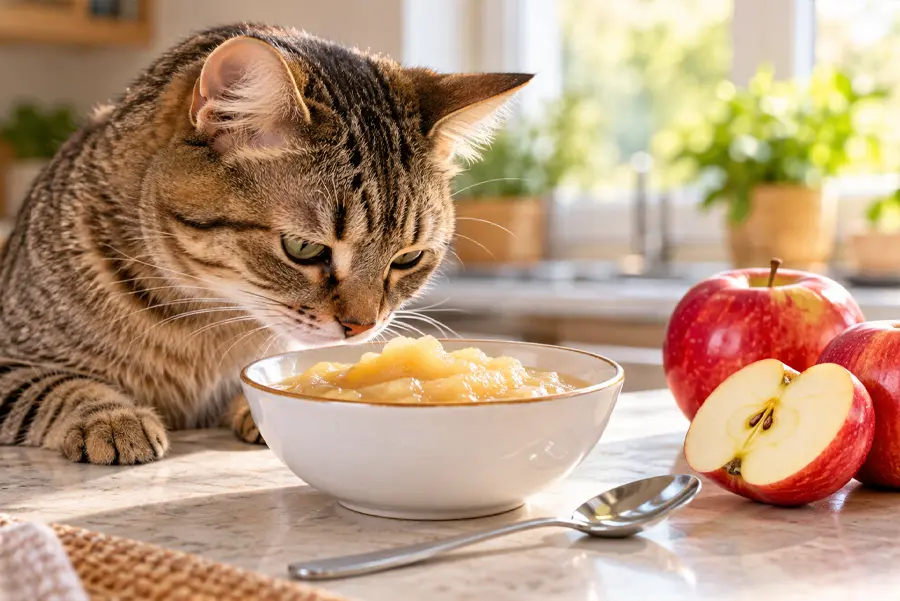
Can cats eat applesauce? Short answer: A tiny lick of plain, unsweetened applesauce is unlikely to hurt a healthy cat. But cats don’t need it, they can’t taste sweetness anyway, and some vets say to skip it altogether. The real danger isn’t the apples. It’s what’s hiding in the jar: added sugar, spices, preservatives and extras.
You’re eating a bowl of applesauce at the kitchen counter, and your cat hops up, plants two paws on the edge and gives it a long, curious sniff. Then comes the look. The “are you going to share that?” look.
Before you let them have a taste, it’s worth knowing what the experts actually say, because here’s the surprising part: they don’t totally agree. Some say a small lick is fine. One major vet site says cats shouldn’t have applesauce at all. We went through the sources, lined up where they agree and where they split, and boiled it down into a simple checklist you can use at the store.
A quick note on who we are: we’re pet writers and researchers, not vets. Every claim below is tied to a source you can check, and your own vet gets the final word on your cat.
Table of Contents
Do the experts agree? Not quite
This is the part most articles skip. Here’s what each source says:
| Source | What it says about cats and applesauce |
|---|---|
| WebVet (reviewed by Athena Gaffud, DVM) | A small lick of plain applesauce is unlikely to harm a cat. Only plain, unsweetened is considered a safe lick. No proven benefit from a taste. |
| Catster (reviewed by Paola Cuevas, MVZ) | Safe in small amounts, only occasionally, and only if it’s all-natural with no preservatives or added sugar. Not necessary in a cat’s diet. |
| PetMD (Sandra C. Mitchell, DVM, DABVP) | Says cats should not be fed applesauce, since it often contains cinnamon, sugar and other spices. Suggests tiny pieces of peeled, seedless apple instead. |
So the honest answer is “probably okay in a tiny amount if it’s plain, but there’s no reason to do it.” If your cat has a health condition, or you just want to play it safe, skipping it is perfectly reasonable.
Why cats don’t really need applesauce
Cats are obligate carnivores. In PetMD’s words, they “need to get most of their nutrition from meat-based products.” Apple flesh isn’t toxic to them, but its nutritional benefits are minimal, and applesauce is just apples that have been cooked down.
Catster adds two more points. Cats can’t taste sweetness, so they get no “treat” feeling from it. And a cat’s digestive system doesn’t handle extra sugar well, which can add up to tooth decay and weight gain over time. WebVet says the vitamins in applesauce don’t make it a useful supplement either. A complete and balanced cat food already covers it.
Read the label: 5 things to check before you share
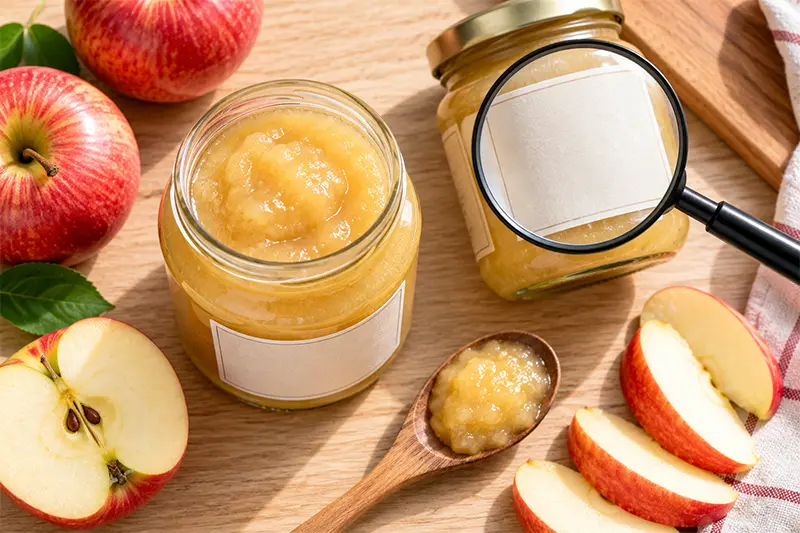
If you decide to offer a lick, the jar matters more than the apple. Flip it over and check these five things.
1. Added sugar
This is Catster’s biggest concern. Sweetened applesauce adds calories your cat doesn’t need and can’t even taste. Pick “unsweetened” and check the ingredients to be sure.
2. Artificial sweeteners (especially xylitol)
Xylitol is dangerous for dogs. For cats, WebVet notes that a small controlled study of six healthy cats didn’t show the same low blood sugar or liver injury seen in dogs, but it also stresses the evidence is limited. Here’s the catch: “sugar-free” doesn’t tell you which sweetener was used. Our advice is simple. If you see any sweetener on the label, put the jar back. If a pet ever gets into something with xylitol, call your vet or a poison hotline like the ASPCA Animal Poison Control Center or the Pet Poison Helpline right away. (Consultation fees may apply.)
3. Cinnamon, nutmeg and other spices
This one is where sources differ. Catster says cinnamon is safe for cats. WebVet says the risk depends on the spice and the dose. PetMD lists cinnamon as one reason to skip applesauce. Since the amounts in a jar aren’t something you control, the cautious move is to pick a plain version with no spices at all.
4. Preservatives
Catster specifically warns against BHT and BHA. A short ingredient list is a good sign. The best one reads: “apples.” Maybe “apples, water.”
5. Mystery extras
Flavored or homemade versions sometimes include things that are a real problem for pets. WebVet flags chocolate, raisins, alcohol and concentrated spices as concerning co-ingredients. Applesauce “snack cups” with fruit blends or flavor mixes are worth reading twice.
How much applesauce can a cat have?
Here’s where honesty matters: there’s no proven, one-size-fits-all amount. WebVet says no evidence-based lick or spoon amount applies to every cat. What the sources do agree on:
- Think “taste,” not “serving.” A small lick off a spoon is the most any source supports.
- Keep it occasional. Catster says “occasionally.” Not daily.
- Treats stay small. WebVet says treats of any kind should stay around 10% of daily calories. For most cats, a lick of applesauce is a rounding error. A bowl is not.
- Watch the spoon. WebVet points out that hidden calories can come from your cat licking spoon residue again and again.
Applesauce vs. fresh apple: which is better for cats?
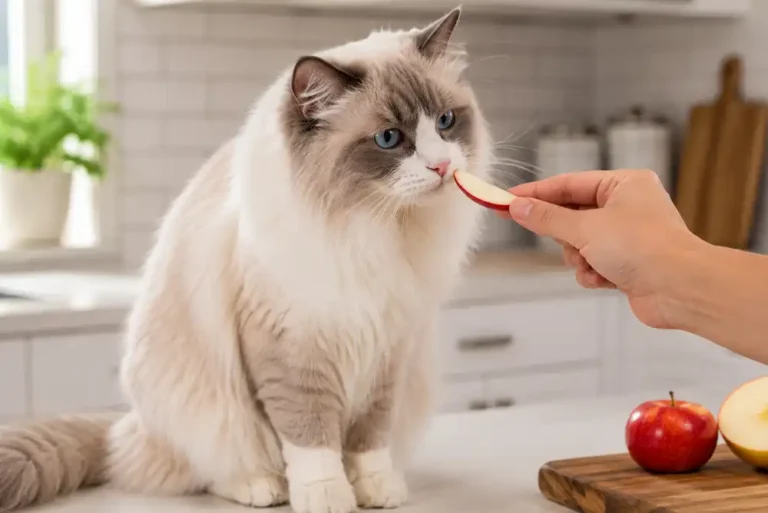
If you really want to share an apple, PetMD’s advice is to skip the sauce and offer a tiny piece of the real thing:
- Wash and peel the apple.
- Remove the stem and seeds. Apple seeds, stems and leaves contain cyanide, which the ASPCA says could be toxic to a cat in large amounts.
- Cut it into small squares, about a quarter inch.
- Limit it to one or two squares, once or twice a week.
- Raw is okay in small amounts, but PetMD says cooked apple is easier to digest.
Want to go deeper? Read our full guide to cats and apples.
What about homemade applesauce?
Making it yourself gives you control over the ingredients, which is a plus. If you do: use apples only, peel them, remove every seed and stem, cook them until soft, let them cool, and skip the sugar, honey and spices. Keep the amount tiny and treat it like any other taste.
My cat already ate applesauce. What now?
Most of the time, a lick of plain applesauce is not a big deal. But if your cat got into a lot of it, or into a flavored or sweetened kind, here’s what to do. WebVet’s advice is a good guide:
- Remove access so your cat can’t eat more.
- Estimate how much was eaten.
- Keep the label. The ingredient list helps your vet.
- Call your vet if it was a large amount, if there are significant symptoms, or if the product has a concerning ingredient.
- Don’t try to make your cat vomit or give another food unless a veterinarian tells you to.
Signs to watch for: vomiting, diarrhea, tremors, weakness, or any unusual behavior. If you see these, call your vet.
Cats who should skip applesauce (or ask the vet first)
- Cats with diabetes or pancreatic disease. PetMD says the sugar in fruit can cause blood sugar swings.
- Overweight cats. Extra calories add up.
- Cats with stomach or gut problems. Extra fiber can cause an upset stomach.
- Kittens and cats on a therapeutic diet. WebVet says these cats need vet-specific guidance.
Myths vs. facts
| The myth | What the vet sources say |
|---|---|
| “Applesauce is a healthy snack for cats.” | Cats are obligate carnivores. Applesauce has minimal benefit and isn’t needed in their diet. |
| “Sugar-free applesauce is the safest.” | “Sugar-free” doesn’t say which sweetener is used. Check the label for any added sweeteners. |
| “If it’s safe for me, it’s safe for my cat.” | Cats digest sugar and spices differently, and jars often contain extras. |
| “Cats love sweet things.” | Catster notes cats can’t taste sweetness, so they gain nothing from it. |
Better treat ideas for cats
Since cats are meat eaters, Catster suggests a high-protein treat instead of fruit. A few options: a store-bought treat made for cats, or a tiny piece of plain, cooked, unseasoned chicken. Check with your vet about what fits your cat’s diet, and keep every treat under that 10% mark.
Frequently asked questions
Can cats eat applesauce?
A small lick of plain, unsweetened applesauce is unlikely to harm a healthy cat, according to WebVet and Catster. PetMD advises against it. Cats don’t need it either way.
Can cats eat unsweetened applesauce?
Unsweetened is the only kind the sources consider acceptable, and only as a tiny, occasional taste. Check the label for hidden sweeteners and preservatives.
Can cats eat applesauce with cinnamon?
Sources don’t agree. Catster says cinnamon is safe for cats, WebVet says it depends on the spice and dose, and PetMD cites cinnamon as a reason to skip applesauce. The cautious choice is a plain version with no spices.
Is applesauce good for cats?
Not really. WebVet says there’s no proven benefit from a taste, and the vitamins don’t make it a useful supplement.
Can cats have applesauce for an upset stomach or constipation?
Don’t use applesauce as a home remedy. If your cat has an upset stomach or isn’t pooping normally, call your vet. Using food to treat a symptom can delay the care your cat actually needs.
Is applesauce bad for kittens?
WebVet says kittens need vet-specific guidance, so ask your vet before offering anything outside their regular diet.
Can cats eat apple slices instead?
Yes, in tiny amounts. PetMD suggests one or two quarter-inch squares of peeled, seedless apple, once or twice a week.
The bottom line
So, can cats eat applesauce? A lick of plain, unsweetened applesauce probably won’t hurt, but it isn’t good for them either, and one major vet source says skip it. If you do share, read the label, keep the amount tiny, and keep it rare. If your cat gets into a sweetened or flavored kind, remove it, save the label, and call your vet if they act off.
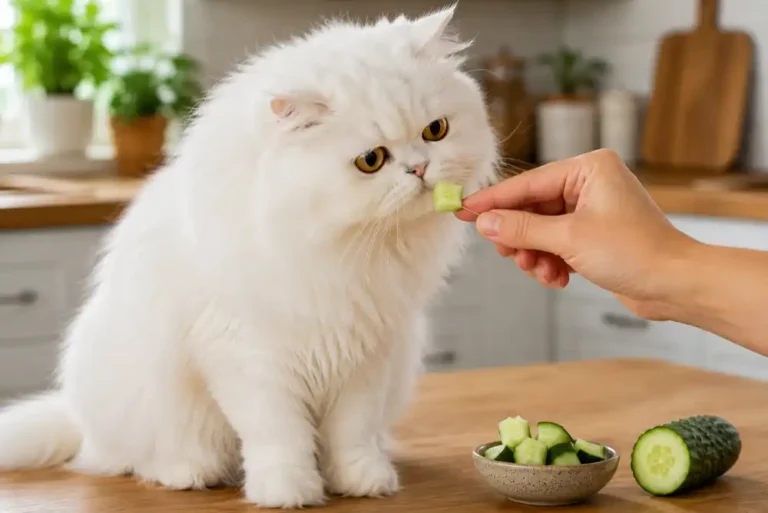
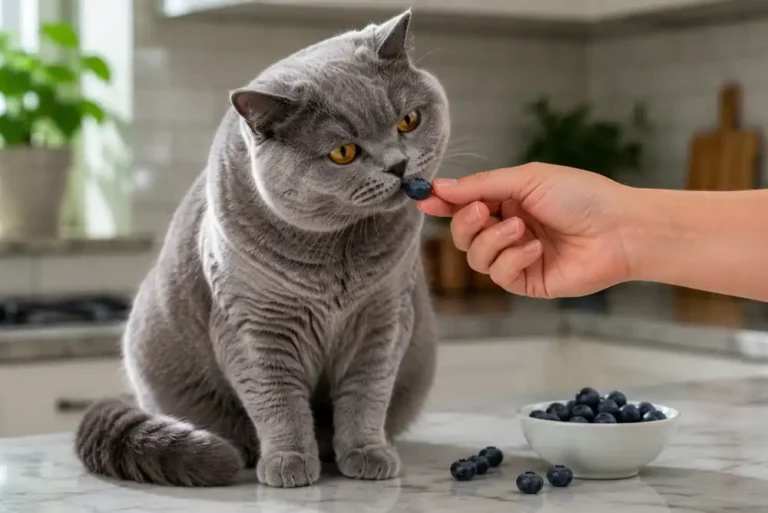
Keep reading: Can cats eat apples? · Can cats eat blueberries? · Can cats eat cucumbers?
Sources
- WebVet: Can Cats Eat Applesauce? (reviewed by Athena Gaffud, DVM)
- PetMD: Can Cats Eat Apples? (Sandra C. Mitchell, DVM, DABVP)
- Catster: Can Cats Eat Applesauce? (reviewed by Paola Cuevas, MVZ)
- ASPCA Animal Poison Control
- Pet Poison Helpline
How we put this together: we compared what the sources above say about cats and applesauce, noted where they disagree, and wrote it in our own words. This article is general information. It isn’t veterinary advice and can’t replace a visit to your own vet, who knows your cat’s health. Last checked October 2026.