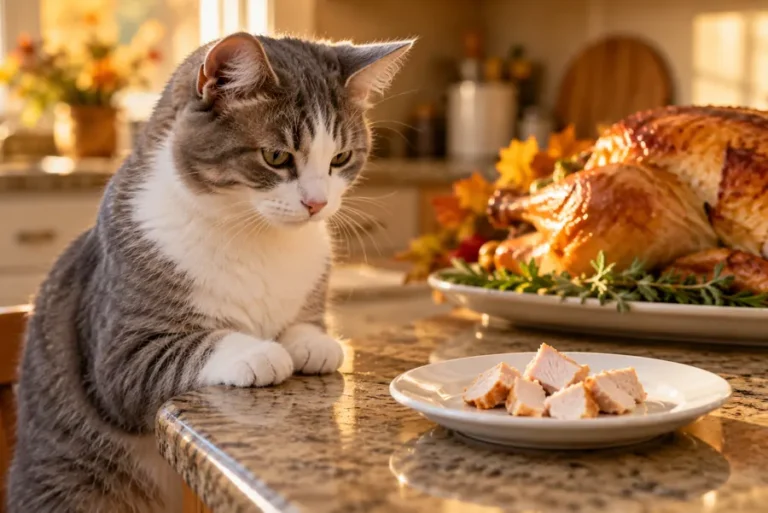

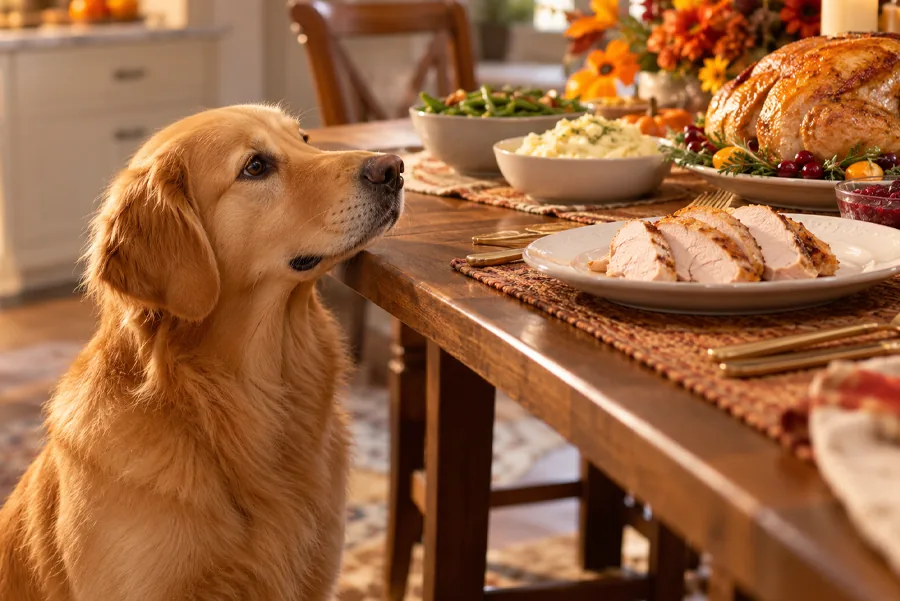
So, can dogs eat turkey bones? It is the question that shows up every year somewhere between the carving knife and the pumpkin pie, usually right after a hopeful dog parks himself under the table. Maybe you have a plate of leftovers in front of you right now, or maybe your dog just swallowed something and you are scrolling with one eye on him.
Short answer: No. Turkey bones, cooked or raw, are not a safe snack for dogs. Cooked ones are the worst because they turn brittle and break into sharp shards. If your dog has already swallowed one, skip to the “what to do” section below.
Table of Contents
Can Dogs Eat Turkey Bones? The Quick Verdict
Vets are remarkably consistent on this one. PetMD puts it plainly: cooked bones are even more dangerous than raw ones because they easily splinter into shards. The American Kennel Club describes cooked poultry bones as brittle and warns that their small size adds to the problem.
So when people ask can dogs eat turkey bones, the vet answer is a firm no. Plain, boneless turkey meat is a different story. It can be a perfectly fine treat. The bones are what cause trouble, and turkey bones are especially risky because they are small enough to swallow but hard enough to hurt on the way down.
I am a writer and researcher, not a veterinarian. Everything here comes from veterinary sources linked throughout, and none of it replaces a call to your own vet.
Why Cooked Turkey Bones Are So Dangerous
Cooking changes the structure of a bone. Heat dries it out, and a dried bone does not bend. It cracks. Picture snapping a dry twig compared with a green one.
When a dog crunches down on a cooked turkey bone, the pieces that come off are often thin, jagged, and sharp enough to scratch or stab soft tissue. Dogs also tend to gulp what they like, so those pieces go down fast and mostly unchewed.
The emergency hospital group VEG lists six reasons dogs should not have turkey bones. Here they are in everyday terms:
- Choking. Fragments can lodge in the throat.
- Internal cuts. Sharp pieces can injure the esophagus, stomach, or intestines.
- Blockages. A swallowed chunk can get stuck and stop food from moving through.
- Perforation. A hole in the gut wall can lead to peritonitis, a serious belly infection.
- Broken teeth. Hard bone can crack a tooth, which hurts and can get infected.
- Germs. Raw or undercooked bones can carry Salmonella or E. coli.
Any one of these can turn a happy holiday into an emergency visit. And the risk does not depend on dog size. A tiny dog has a smaller throat, but a big dog can still swallow a large piece and get it stuck further down.
Can Dogs Eat Turkey Bones if They Are Raw?
Asking can dogs eat turkey bones raw is where the internet gets messy, so let me be careful. Some people feed raw bones on purpose, and some vets are open to raw meaty parts in specific situations. The AKC notes that raw turkey necks are an option only after talking with your vet, mainly because of Salmonella risk.
A raw bone is less brittle than a cooked one, but it is still not risk free. Dogs can still choke, chip a tooth, or get a blockage. Raw poultry also carries bacteria that can make your dog sick and can spread to your hands and kitchen.
If you are curious about a raw diet, treat it as a conversation with your vet, not a Thanksgiving experiment. Leftover carcass bones from the dinner table are never the place to start.
Quick Reference: Which Turkey Parts Are Okay?
| Turkey part | Safe for dogs? | Why |
|---|---|---|
| Cooked bones (any) | No | Brittle, splinter, can cut or block |
| Raw bones | Not recommended | Choking, tooth damage, bacteria |
| Plain white meat, boneless | Yes, in small amounts | Lean and easy to digest |
| Skin | No | Very fatty, can trigger pancreatitis |
| Stuffing and gravy | No | Onion, garlic, butter, and salt |
| Deli or smoked turkey | No | High in sodium and additives |
What to Do If Your Dog Ate a Turkey Bone
First, take a breath. Many dogs that swallow a bone piece pass it without trouble, but you cannot know which dogs those will be, so you need a plan.
- Stay calm and take away anything left. Do not chase your dog. Chasing makes dogs gulp faster. Hill’s Pet also advises not grabbing at the food, especially if your dog guards it.
- Check the mouth only if it is easy and safe. If he is choking, pawing at his mouth, or gagging, go straight to an emergency vet.
- Do not make him vomit unless a vet tells you to. VEG specifically warns against this, since sharp pieces can do more damage on the way back up.
- Call your vet or an emergency clinic. Tell them roughly how big the piece was, whether the bone was cooked, and when it happened. They will tell you whether to come in.
- Keep watching for several days. Bone fragments can irritate or injure the rectum on their way out, so watch his stools.
If you cannot reach your regular vet, the Pet Poison Helpline (855-764-7661) and the ASPCA Animal Poison Control Center (888-426-4435) can advise, though both charge a consultation fee. Bones are an injury risk more than a poison, so a vet visit is usually the better call.
Warning Signs After Dogs Eat Turkey Bones: Go Now
Trouble does not always show up right away. Some dogs seem fine for a day and then go downhill. Contact a vet quickly if you see any of these after your dog eats turkey bones:
- Vomiting, retching, or constant gagging
- Heavy drooling
- Bloated, tight, or painful belly
- Straining to poop, or no poop at all
- Blood in the stool or bright red blood around the rear end
- Lethargy or refusing food
- Restlessness, pacing, or a “praying” stretch with the front end down
If you are still wondering can dogs eat turkey bones in tiny amounts, the answer is the same. Do not wait to see if it gets better. If you are asking yourself whether it is serious, that is already a good reason to call.
How Vets Check for Bone Problems
If your dog already ate turkey bones, knowing what happens at the clinic can make the visit less scary. A vet will usually feel the belly, ask about timing, and often take X-rays. Bone shows up well on X-rays, so they can see where the pieces are and whether anything looks stuck.
From there, the plan depends on what they find. Some dogs are simply monitored and fed bulky food to help fragments move along. Others need medication, a procedure to remove the piece, or surgery if there is a blockage or a tear.
I will not guess at costs, because they vary a lot by region and clinic. What I can say is that early care is almost always simpler than waiting until a dog is very sick.
Safer Ways to Share Thanksgiving With Your Dog
The good news is that even when the answer to can dogs eat turkey bones is no, you can include your dog in the day without risking a bone. Here is what the vet sources agree on for turkey itself:
- Cook it fully, with no bones, no skin, and no seasoning.
- Cut it into small pieces, about 1 inch, as PetMD suggests.
- Pick white meat first. Dark meat is fattier.
- Keep treats under 10 percent of your dog’s daily food.
If you want something to chew on, choose a dog-safe chew sized for your dog and approved by your vet instead of a bone. Another easy trick is to put a few plain turkey cubes into a puzzle toy, so he gets the fun of working for it.
Pumpkin is another holiday food many dogs can enjoy in small amounts. We cover that in our guide on whether dogs can eat pumpkin.
Keep the Trash and Counters Off Limits
Plenty of cases behind the can dogs eat turkey bones question happen long after dinner, when the carcass is in the trash. Dogs are excellent at finding it.
A few habits help:
- Take the bag out right away, or put it in a lidded bin outside.
- Wrap the carcass and scraps before they go in the garbage.
- Tell guests not to slip food to the dog, especially kids.
- Keep platters pushed back from the counter edge.
- Set up a quiet room with a chew toy if the crowd is big.
Most holiday scares are really about a crowded house and a dog who gets an unexpected chance. Planning around that is easier than any rescue.
Cats and Turkey: A Quick Note
If you share your home with a cat, the same bone rule applies, and you can read our guide to whether cats can eat turkey for the cat-specific details.
Frequently Asked Questions
Can dogs eat turkey bones if they are raw?
It is not recommended. Raw bones can still cause choking, tooth damage, and bacterial illness. If you are interested in raw feeding, talk to your vet first.
Can dogs eat turkey bones from a turkey leg or wing?
No. These bones are small, and when cooked they break into sharp pieces. Remove the meat and throw the bones out where your dog cannot reach them.
My dog ate a small turkey bone and seems fine. Should I still worry?
Call your vet anyway. Some problems do not show up immediately, and your vet can tell you what to watch for and when to come in.
Should I make my dog throw up after he eats a turkey bone?
Not unless a veterinarian tells you to. Sharp pieces can injure the throat on the way back up.
How long does it take a dog to pass a bone?
There is no reliable answer. It depends on the size of the piece, the size of the dog, and whether anything gets stuck. This is exactly why calling a vet is better than waiting.
Is plain turkey meat okay for dogs?
Yes, fully cooked, boneless, skinless, and unseasoned turkey is generally fine in small amounts, according to PetMD and the AKC.
The Bottom Line
So, can dogs eat turkey bones? No, and it is worth saying that to every guest at the table. The meat can be a treat, but the bones belong in a sealed bin, well away from your dog.
If your dog does get one, stay calm, skip home remedies, and call your vet. A quick phone call is a small price compared with an emergency surgery.
This article is general information and not a substitute for veterinary care. If your dog is in distress, contact a veterinarian or emergency clinic right away.