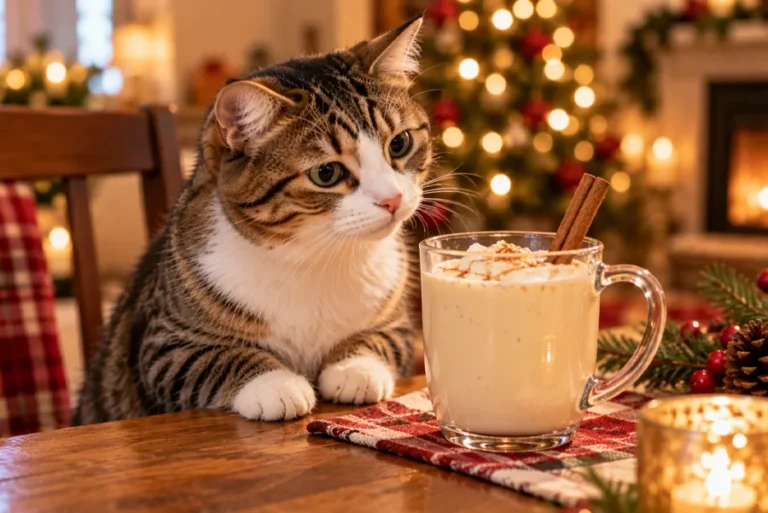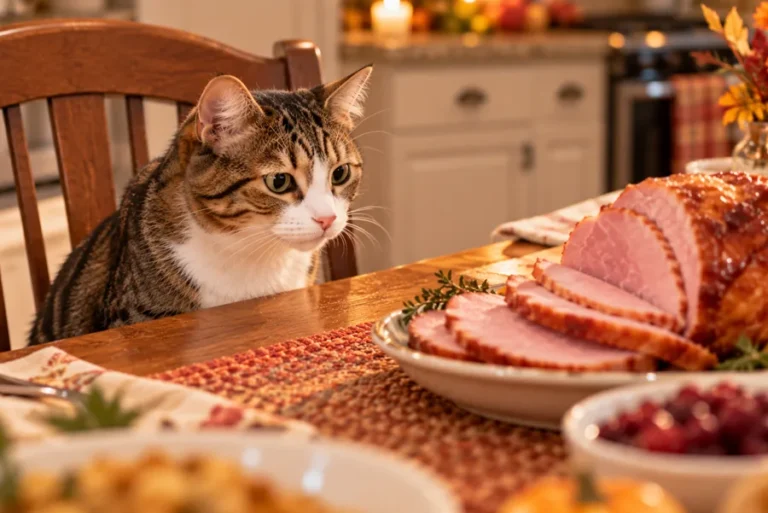

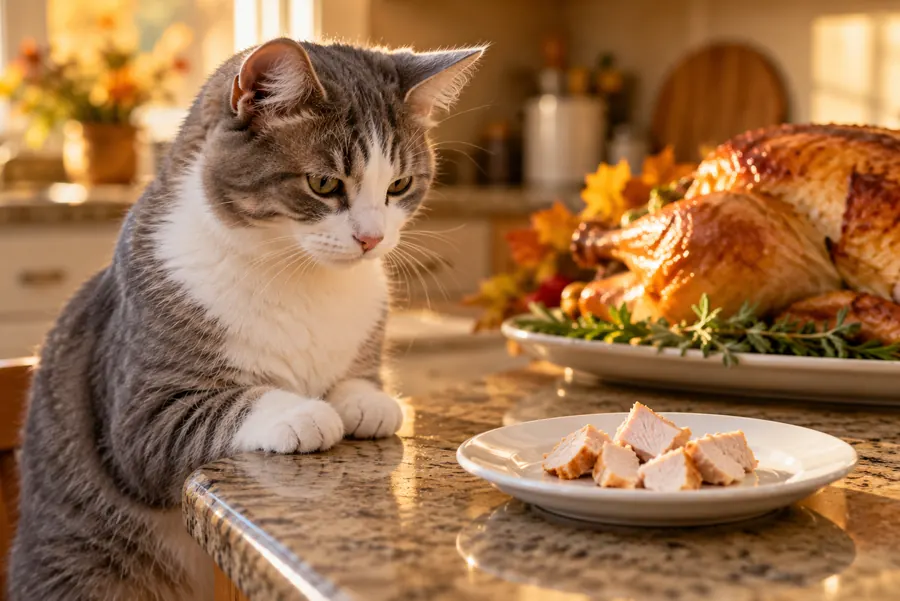
Can cats eat turkey? Yes, as long as it’s plain, fully cooked and free of skin and bones. Turkey is one of the safer holiday foods for a cat, which is a nice change on a day when so much of the table is off limits. The trouble is that almost nothing on a Thanksgiving table is just turkey. By the time it has been brined, buttered, stuffed and covered in gravy, it’s a different food.
This guide is built around that gap. You’ll get six simple rules, a plate-by-plate map of the Thanksgiving table, the portion size vets actually mention, and what to do if your cat gets into something it shouldn’t. If you came here because the bird is already on the counter and your cat is staring at it, the short version is right below.
I’m a writer, not a veterinarian. Everything here comes from published veterinary sources, all linked at the end, so you can check each point yourself.
Short answer: So, can cats eat turkey? A small piece of plain, fully cooked turkey is fine for most healthy cats. Skip the skin, the bones, the seasoning, the stuffing, the gravy and any deli or processed turkey. Keep it to a treat, about 1 inch square, and call your vet if your cat eats something that isn’t on the safe list.
Table of Contents
Why turkey works for cats
Cats are obligate carnivores, which means their bodies are built around meat. PetMD points out that plain turkey is lean, usually easy on the stomach, and naturally contains taurine, an amino acid cats need for heart health and vision. It also brings B vitamins and minerals such as selenium and zinc.
White meat is the leaner pick. Dark meat has a bit more iron and zinc, but it also has more fat and calories, so it’s a smaller, occasional bite. Either way, turkey is a side note. It doesn’t replace a complete cat food, and a cat that fills up on holiday meat may skip its regular dinner.
Can cats eat turkey at Thanksgiving? The 6 rules
1. Plain and fully cooked only. Bake, boil or broil it. PetMD says to skip deep-frying, since the added fat is too much, and to let the meat cool before serving. Raw or undercooked turkey can carry bacteria like salmonella, which is a problem for your cat and for you.
2. Take the skin off. It’s mostly fat and fat is what upsets cat stomachs. Cats.com adds that fatty skin can contribute to pancreatitis, which is painful and needs a vet.
3. No bones, ever. Cooked turkey bones splinter. That can cause choking or injuries in the mouth, throat or intestines. A drumstick that falls off a plate is the usual culprit, so check the floor.
4. No seasoning, and especially no onion or garlic. Onion and garlic are common in turkey rubs, brines and pre-cooked birds. According to PetMD, they damage red blood cells and can lead to anemia, even in small amounts. Plain means plain: no salt, butter, oil, herbs or spice blends.
5. Skip deli turkey and turkey bacon. They aren’t poisonous in one bite, but PetMD notes they’re loaded with sodium and preservatives, which isn’t something to build into a cat’s habit.
6. Keep the portion small. PetMD’s Thanksgiving guide suggests a piece about 1 inch square. Its turkey guide describes a bite about the size of a thumb tip. Both agree on one thing: treats of every kind should stay under 10% of your cat’s daily calories.
What about the rest of the Thanksgiving table?
Here’s where the holiday gets tricky. This is how the common dishes sort out, based on the sources below.
| Dish | For your cat | Why |
|---|---|---|
| Plain cooked turkey breast | Yes, small piece | Lean protein. Remove skin and bones. |
| Turkey skin and drippings | No | Very fatty. Can upset the stomach and contribute to pancreatitis. |
| Turkey bones | No | They splinter and can cause choking or internal injury. |
| Stuffing | No | Most recipes contain onion, and some contain garlic. |
| Gravy | No | Often made with onion, garlic and dairy. Most cats are lactose intolerant. |
| Mashed potatoes | A tablespoon at most, only if plain | Must be fully cooked and peeled, with no butter, cream, cheese or seasoning. |
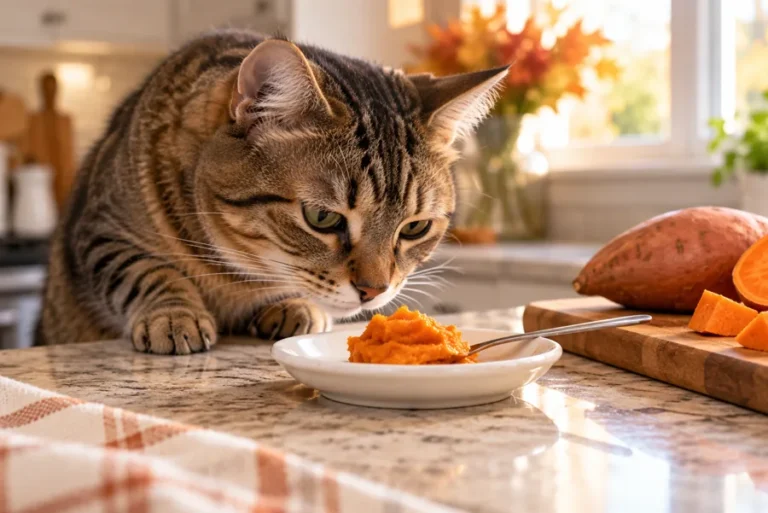
| Sweet potato or yam | A tablespoon at most, only if plain | Same rules as above. Raw potatoes and skins contain solanine, which is toxic. |
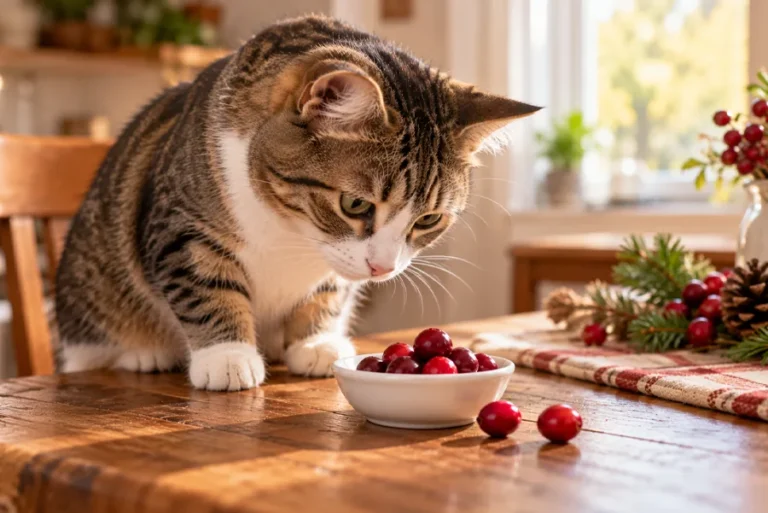
| Cranberry sauce | No | Cats.com says it’s too sugary. |
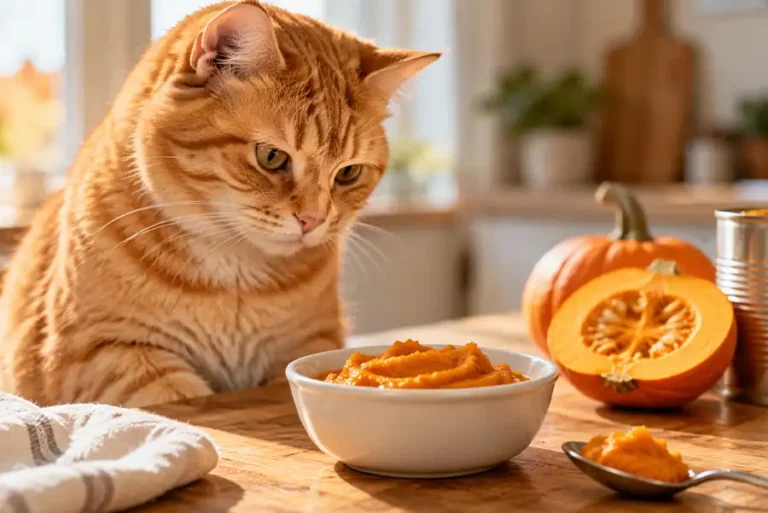
| Pumpkin pie and desserts | No | Sugar, spices, sometimes chocolate or the sweetener xylitol. See our pumpkin guide. |
| Wine, beer, coffee | Never | Alcohol and caffeine are both dangerous for cats. |
Why the gravy and stuffing matter more than the turkey
When a Thanksgiving table goes wrong for a cat, it’s rarely the turkey meat that causes it. It’s the things stirred into everything else.
PetMD says onions, garlic, leeks and chives can cause anemia that can turn fatal. The signs it lists include weakness, yellowing of the skin or gums, dark urine, fast breathing, vomiting and diarrhea. These don’t always show up right away, which is one reason “she only had a little” isn’t a safe plan when onion or garlic is involved.
The ASPCA makes the same point about onions and garlic being common in holiday dishes. It also warns about desserts: xylitol, an artificial sweetener found in some baked goods, can cause dangerously low blood sugar and liver damage, and chocolate is toxic too. If a dessert was made without you watching the ingredients, assume it’s not for the cat.
How to serve turkey to your cat
If your cat is healthy and the turkey is plain, here are some simple ways to share a bite without a fuss.
- Cut it small. Dice a piece to about 1 inch square, or into bite-size shreds.
- Let it cool. Serve at room temperature, not hot out of the oven.
- Start tiny the first time. PetMD advises a very small amount first and watching for vomiting or diarrhea before offering the full piece.
- Mix it into food or use a puzzle feeder. Shredded turkey stirred into the usual wet food is easy. A food puzzle makes the treat last longer.
- Set aside your cat’s piece before the meal. Cut it off the bird before it’s seasoned or sauced, and the question answers itself.
That last one is the trick that makes the whole day easier. If the cat’s bite is already on a little plate in the fridge, nobody has to improvise at the dinner table.
Cats on special diets and sensitive cats
PetMD’s note applies to every food in this guide: check with your vet before giving a new people food, especially if your cat has health conditions or eats a prescription diet. Cats on a prescription diet shouldn’t get extras outside it unless the vet says so. If your cat has kidney or heart problems, even something as simple as salty ham or seasoned meat is worth a phone call first.
Keeping the table and trash safe
A lot of holiday trouble happens away from the plate. The ASPCA suggests emptying the trash often or keeping pets out of the kitchen, because garbage can hold bones, chocolate and onions. Cats.com recommends telling guests not to feed table scraps, since a friendly relative with a handful of “just a taste” can undo your careful rules.
A quick pre-dinner routine helps:
- Give your cat its regular meal before guests arrive, so it isn’t hungry.
- Put the turkey carcass in a sealed bag, then into an outside bin.
- Cover or move desserts and anything with chocolate.
- Tell guests the plan: one little plate for the cat, no scraps.
When to call the vet
Call your vet if your cat eats a large amount of turkey, or any amount of skin, bones or seasoned meat and you’re worried about it. PetMD says to call right away if you suspect garlic, onion, chives, leeks, chocolate or alcohol. Vomiting, diarrhea, low energy or a drop in appetite after a new food are all reasons to check in.
For poison questions, PetMD lists two helplines: the ASPCA Animal Poison Control Center at (888) 426-4435 and Pet Poison Helpline at (855) 764-7661. Both may charge a consultation fee, and PetMD lists $85 for Pet Poison Helpline at the time of its article. Keep the packaging or recipe and a rough idea of how much was eaten, because that’s the first thing they’ll ask.
Can cats eat turkey? Frequently asked questions
Can cats eat turkey every day?
PetMD says a healthy cat with no underlying conditions can have a small portion daily, but it should stay a treat under 10% of daily calories. Your regular cat food should be the main meal.
Can cats eat raw turkey?
PetMD says to feed cooked turkey, because raw meat can carry bacteria such as salmonella, E. coli and campylobacter.
Can cats eat ground turkey?
Yes, if it’s fully cooked and plain, with no onion, garlic or other seasoning, according to PetMD.
Can cats eat deli turkey or turkey bacon?
It’s best to skip them. They’re high in sodium and often contain preservatives or seasonings.
Can cats eat turkey skin?
No. It’s very fatty and can upset the stomach or contribute to pancreatitis.
Can cats eat turkey bones?
No. Cooked bones splinter and can cause choking or injuries inside the mouth, throat and intestines.
Can kittens eat turkey?
The sources I read don’t cover kittens specifically. Ask your vet first.
The bottom line
So, can cats eat turkey? Yes. Turkey is a good holiday treat for a cat, as long as it’s plain, cooked, skinless, boneless and small. Everything around the turkey is where the risk lives: stuffing, gravy, bones, desserts and the trash can. Set your cat’s piece aside before the cooking gets creative, tell your guests the rules, and keep your vet’s number handy.
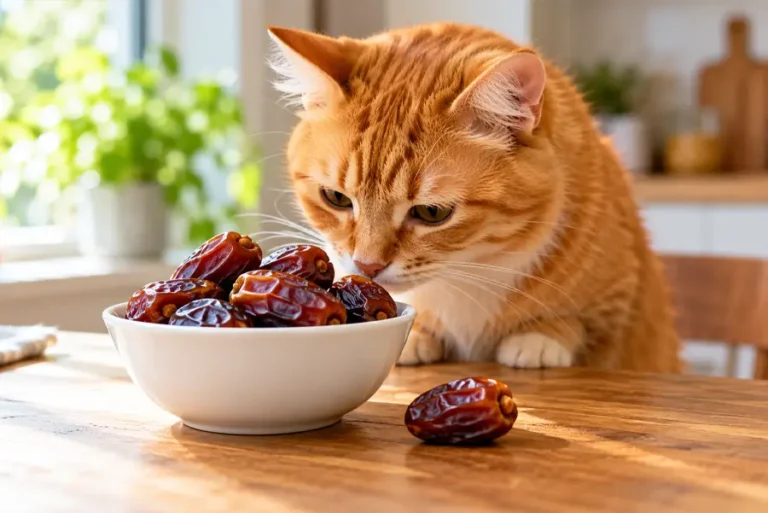
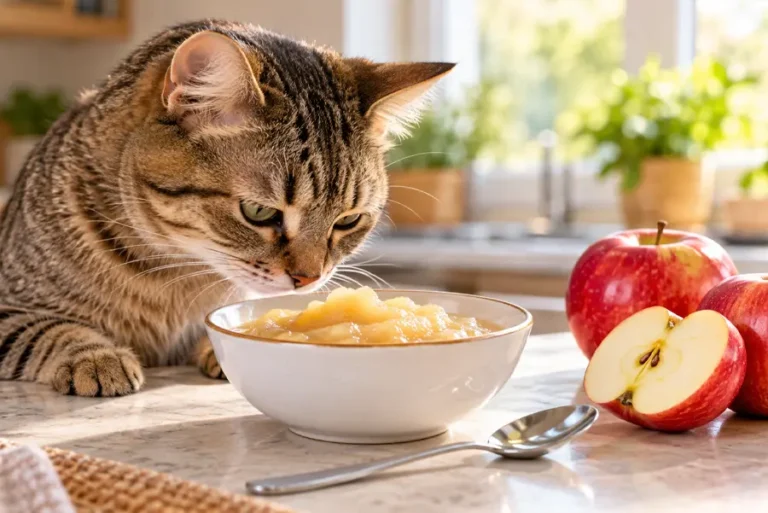
Looking for more cat food answers? Try our guides on pumpkin, dates and applesauce.
Can cats eat turkey at your holiday table this year? Yes, with the six rules above and a call to your vet when anything is unclear.
This article is for general information. It isn’t veterinary advice, and I’m not a veterinarian. If your cat seems unwell, call your vet or an emergency clinic.
Sources
- PetMD: Can Cats Eat Turkey? (by Sandra C. Mitchell, DVM, reviewed by Jennifer Coates, DVM, updated October 2025)
- PetMD: What Thanksgiving Foods Can Cats Eat? (by Jennifer Coates, DVM, reviewed by Molly Price, DVM, updated October 2024)
- ASPCA: Thanksgiving safety tips
- Cats.com: Can Cats Eat Thanksgiving Food? (by Dr. Aisling O’Keeffe, a veterinarian)