
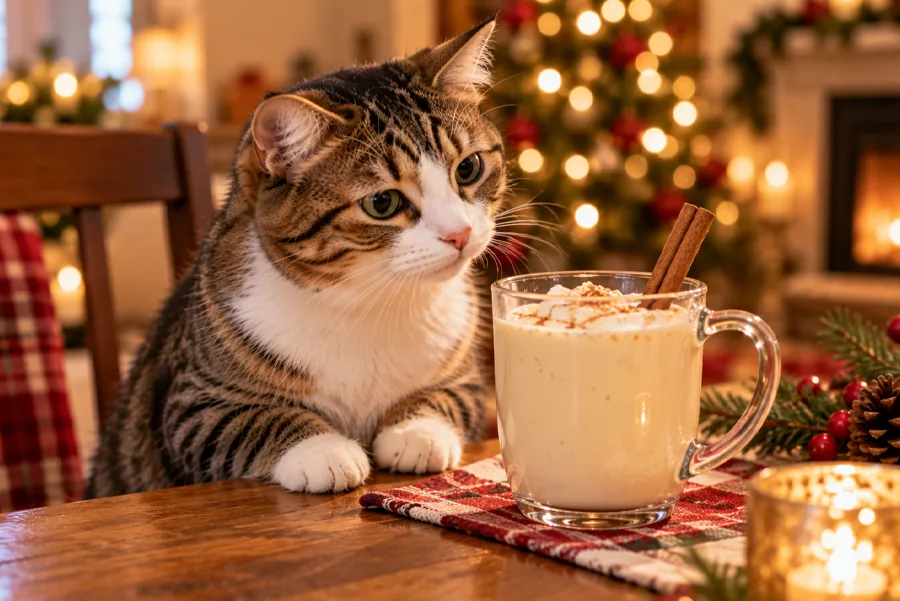
Can cats eat eggnog? Every December, somebody leaves a glass of creamy, spiced eggnog on the coffee table, and every December, somebody’s cat tries to take a sip. It looks harmless, and plenty of people assume can cats eat eggnog the way they eat any other creamy treat. It is milk, eggs, sugar, and a few holiday spices, after all. But for a cat, nearly every item on that ingredient list comes with a catch.
Short answer: No, eggnog is not a good drink for cats. A lick is not likely to be a crisis, but the dairy, alcohol, raw eggs, sugar, and spices all carry risks, and some homemade versions can be dangerous. Keep it out of reach, and call your vet if your cat drank a real amount.
Table of Contents
Can Cats Eat Eggnog? What Vets Say
The veterinary hospital network VCA has a page on exactly this situation, titled Oops! My cat drank the eggnog. It lists alcohol, raw eggs, milk and cream, vanilla extract, sugar, and spices such as nutmeg and cloves as ingredients that can cause trouble for cats.
So can cats eat eggnog? Think of it less as a single food and more as a mix of five or six different risks, any one of which can matter, depending on the recipe and how much your cat drinks.
I am a writer and researcher, not a veterinarian. I have linked my sources so you can read them yourself, and your own vet should be your first call if your cat drank any.
5 Dangerous Ingredients in Eggnog
### 1. Alcohol
Many eggnog recipes include rum, brandy, bourbon, or whiskey. VCA says alcohol can cause vomiting, diarrhea, a drunken gait, coma, or death in cats. A cat is a small animal, so even a modest amount of an alcoholic drink is a much larger dose than it would be for a person.
An article on foods to avoid at Christmas, quoting a veterinarian, also warns that rum or brandy can cause loss of coordination and that cats can go into a coma from alcohol poisoning.
Vanilla extract is a sneaky source. VCA notes it is mostly alcohol, so it carries the same risks, although the amount in a recipe is usually small.
### 2. Milk and cream
The base of eggnog is milk or heavy cream. VCA says cats are lactose intolerant, so dairy can cause diarrhea and an upset stomach. The same Christmas foods article notes that many adult cats are lactose intolerant and that milk can cause loose stools.
This surprises people, since cartoon cats are always lapping up milk. In real life, many adult cats cannot digest the sugar in milk well.
### 3. Raw eggs
Traditional homemade eggnog is often made with raw or lightly cooked eggs. VCA says raw eggs can cause food poisoning. The Christmas foods article adds that eggs are fine unless the eggnog is homemade with unpasteurized eggs. If a recipe uses raw egg, that is another reason to keep it away from your cat.
### 4. Sugar
Sugar is mostly harmless in small amounts, according to VCA, but it can disrupt blood sugar in cats with diabetes. The Christmas foods article notes that sugar can also contribute to loose stools.
### 5. Spices: nutmeg and cloves
VCA says spices such as nutmeg and cloves can be toxic in large quantities. Catster’s nutmeg guide, reviewed by veterinarian Dr. Lorna Whittemore, explains that nutmeg contains myristicin, an oil that is harmful only in high amounts. It says most sources put the toxic dose at about one grated teaspoon, though size and sensitivity vary, and that trace amounts in baked goods are generally considered fine. Cats should not be fed nutmeg intentionally.
A glass of eggnog contains far less than a teaspoon of nutmeg per sip, so spice is rarely the main problem in a lick. But it adds to the total list, and a cat that drinks a lot could get more than you would expect.
How Risky Is Each Type of Eggnog?
Not every eggnog is the same. Here is how I would think about it, based on the ingredients the sources mention:
| Type | Main concerns | Overall caution |
|---|---|---|
| Alcoholic homemade eggnog | Alcohol, raw egg, dairy, sugar, spices | Highest |
| Store-bought alcoholic eggnog | Alcohol, dairy, sugar | High |
| Non-alcoholic store-bought eggnog | Dairy, sugar, spices | Moderate |
| Eggnog latte or flavored coffee drink | Dairy, sugar, spices, caffeine | Moderate to high |
| A lick of the glass rim | Small exposure | Usually low, but watch your cat |
Non-alcoholic does not mean harmless. It means one big risk is gone and the rest remain.
What to Do If Your Cat Drank Eggnog
VCA’s advice is simple, and it works well in a panic.
- Remove the eggnog. Take away the glass or bowl so your cat cannot drink more.
- Find the recipe or label. Homemade recipes and store-bought ingredient labels help a vet assess the risk.
- Estimate how much. A lick is different from half a glass. Note your cat’s weight too.
- Contact a professional right away if alcohol was involved or you are worried. VCA says to contact your veterinarian or the ASPCA Animal Poison Control Center at 1-888-426-4435. A consultation fee may apply.
- Watch your cat closely. Look for vomiting, diarrhea, wobbliness, odd behavior, or unusual sleepiness.
Do not wait for symptoms if alcohol was in the drink, because can cats eat eggnog with rum is a very different question from plain milk. Cats are small, and alcohol poisoning can progress quickly.
Symptoms to Watch For
Depending on what was in the eggnog, signs can include:
- Vomiting or retching
- Diarrhea or loose stools
- A wobbly or drunken walk
- Unusual drowsiness
- Disorientation, or random meowing and vocalizing
- Tremors or seizures
- Dehydration
Catster notes that vomiting after nutmeg may begin 3 to 6 hours after ingestion, and that cats often hide discomfort, so a lack of visible signs does not rule out a reaction. Seek veterinary care right away for severe dehydration, seizures, or any neurological signs.
What About a Tiny Lick?
When owners ask can cats eat eggnog by accident, the honest answer is that most healthy cats that lick a bit of eggnog off a finger or a glass rim will be fine. The risk goes up with the amount, and it goes up more if the eggnog contained alcohol.
That said, I would not offer it on purpose. There is no benefit to your cat, so can cats eat eggnog as a holiday treat is a question with no upside, and the downside, from an upset stomach to something more serious, is not worth a holiday photo. When people ask can cats eat eggnog just once for fun, the vet answer is no.
One more practical point: size changes everything. A standard cat weighs somewhere around ten pounds or less, so even a few swallows of a rich, alcoholic drink are a big dose compared with what a person would take. That is the main reason vets treat any alcohol exposure in a cat as something to call about, rather than something to wait out.
If you are not sure what was in the drink, treat it as unknown and call. Having the recipe, the carton, or even a photo of the label can save time, and it helps the vet or poison line give you advice that fits your cat instead of a guess.
Safer Holiday Treats for Cats
If you want your cat to join the holiday, there are much better options:
- A few small pieces of plain cooked turkey, which we cover in our guide on whether cats can eat turkey
- A vet-approved commercial treat
- A fresh bowl of water
- A new toy or a cardboard box, which cats often prefer to anything edible
If you are weighing other holiday meats, see our guide on whether cats can eat ham, and for fruit and sides, our articles on whether cats can eat cranberries and whether cats can eat sweet potato can help.
How to Keep Eggnog Away From Your Cat
Cats are curious and agile, and a glass left on a low table does not stay full for long. These habits help:
- Cover drinks and keep them out of reach
- Put empty glasses in the dishwasher or sink right away
- Keep your cat in a quiet room while the party is going on
- Remind guests not to share drinks or food
- Store alcohol and vanilla extract in a closed cabinet
- Keep a number for your vet and poison control saved in your phone
Cats are great at jumping onto counters, so do not assume high is safe. Cover or close the container.
Eggnog and Other Pets
If you also have a dog, the same cautions apply, and your vet can advise on the safest holiday foods. Many of the same ingredients, including alcohol, nutmeg, and sugar, are a concern for dogs too.
Frequently Asked Questions
Can cats eat eggnog if it is non-alcoholic?
It is still not recommended. It contains dairy, sugar, and spices that can upset a cat’s stomach.
Can cats eat eggnog ice cream?
It is best to avoid it, because it has dairy, sugar, and often spices.
Can cats drink eggnog with raw eggs?
No. Raw eggs can cause food poisoning, according to VCA.
Is nutmeg in eggnog dangerous for cats?
In large amounts, yes. Small amounts in baked goods are generally considered fine, but cats should not be fed nutmeg on purpose.
My cat drank a lot of eggnog. What should I do?
Call your vet or the ASPCA Animal Poison Control Center at 1-888-426-4435 right away, and have the recipe or label ready.
Can kittens have eggnog?
No. Kittens do best on complete kitten food, and dairy and alcohol are especially risky for small animals.
The Bottom Line
So, can cats eat eggnog? It is better not to. The dairy, raw eggs, sugar, spices, and especially the alcohol make it a poor choice, and some versions can be dangerous.
Keep the glass covered, offer a cat-safe treat instead, and call your vet or poison control if your cat drank a real amount.
This article is general information and not a substitute for veterinary care. If you think your cat has consumed alcohol or something harmful, contact a veterinarian or poison control immediately.