
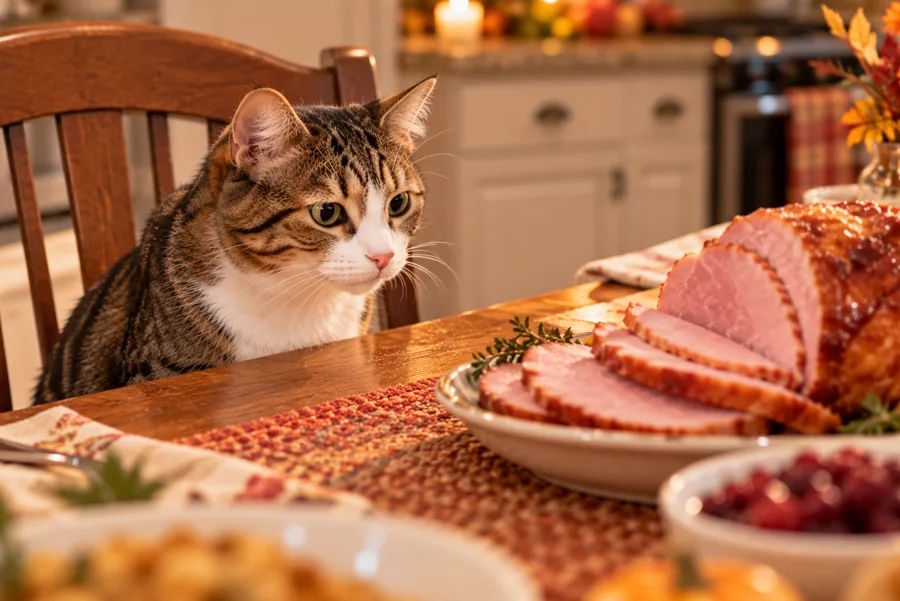
Can cats eat ham? It is a fair question on any holiday table, because a cat has an uncanny ability to appear the moment a pink, salty slice hits a plate. Ham smells like meat, and cats are meat eaters, so the interest makes complete sense. What matters is whether it is a good idea to share.
Short answer: A tiny piece of plain, cooked ham is unlikely to poison a healthy cat, but vets generally advise against it. Ham is salty, fatty, and often comes with glazes or seasonings that cats do not need, so it is better to pick a plainer meat.
Table of Contents
Can Cats Eat Ham? What Vets Say
Webvet, in an article medically reviewed by Dr. Athena Gaffud, DVM, rates ham “not recommended” for cats. It says a small amount of plain cooked ham is unlikely to poison a healthy cat, but that it is salty, calorie-dense, and unnecessary in a complete diet.
The University of Georgia spoke with Autumn McBride Vetter, a clinical assistant professor in its College of Veterinary Medicine, who describes ham as “a fattier meat that is also high in sodium.” She says small amounts are unlikely to be extremely harmful and that ham can work as an occasional treat, since cats are carnivores that crave protein. She still recommends avoiding ham altogether.
So can cats eat ham? Technically yes, in a tiny, plain amount, and the experts mostly say you should not make a habit of it.
I am a writer and researcher, not a veterinarian. The sources are linked so you can read them yourself, and your own vet should have the final word on your cat’s diet.
Why Ham Is Not Ideal for Cats
So can cats eat ham without harm? Ham is not toxic the way chocolate or onion is. The trouble is the package it comes in. These are the main reasons vets hesitate.
### 1. It is high in fat
According to Dr. Vetter, ham is rich in fat, which can upset a cat’s digestive tract, especially the pancreas, and she links this to pancreatitis, diarrhea, and vomiting. Webvet adds some nuance: fatty food does not automatically cause pancreatitis, and vomiting after a rich meal does not confirm it, nor does the absence of vomiting rule it out. The sensible takeaway is that a fatty food is a risk worth avoiding, not a guaranteed illness.
### 2. It is high in salt
Dr. Vetter notes that salt can worsen dehydration, and cats already tend to drink too little water. Webvet says sodium varies by product and that salt poisoning depends on the dose, access to water, and the cat’s health. Cats with kidney, heart, or urinary problems should especially avoid ham, according to Dr. Vetter.
### 3. It may contain seasonings
Webvet says to check the label or recipe for onion, garlic, sweeteners, alcohol, and raisins, noting that onion and garlic risk depends on the dose. Dr. Vetter says ham cooked with onion or garlic is toxic to cats. Holiday glazes often include sugar, mustard, cloves, pineapple, or wine, so glazed ham deserves extra caution.
### 4. Preservatives and nitrates
Here I want to be careful. Webvet points out that nitrates and preservatives are not established feline poisons just because they appear on a label. So there is no need to panic over them. The more practical worry is the salt and fat that tend to come with cured meat.
### 5. Physical hazards
Webvet lists bones, skewers, string, wrappers, foil, netting, and absorbent pads as separate hazards from the meat itself. A cat that grabs a slice of ham can swallow string or wrapping with it.
Which Types of Ham Are the Most Risky?
Not all ham is the same, and Webvet specifically says plain cooked, cured ready-to-eat, deli, glazed, canned, and uncooked pork are different exposures. Here is how I would rank them for a cat owner, based on what the sources say:
| Type | Concern level | Why |
|---|---|---|
| Plain cooked ham, no seasoning | Lower | Still salty and fatty, so not recommended |
| Deli or sliced packaged ham | Moderate | Often high in sodium |
| Glazed holiday ham | Higher | Sugar, spices, possible onion or garlic, alcohol |
| Canned ham | Moderate | Salt, fat, additives |
| Uncooked pork or raw ham | Higher | Webvet notes uncooked products can carry Salmonella and Listeria |
| Leftover ham that sat out | Higher | Spoilage risk, separate from the meat itself |
| Ham bone | Avoid | Choking and obstruction hazard |
If You Decide to Offer a Tiny Piece
Some cat owners will decide the answer to can cats eat ham is “a nibble” anyway. If you do, Dr. Vetter’s tips are practical:
- Choose fully cooked, unseasoned, sliced ham without bone. Plain is the only version worth considering.
- Tear it into strips smaller than an inch. That reduces choking risk.
- Avoid the fattier pieces. Go for the leanest part.
- Keep it rare. An occasional treat, not a routine.
She also notes that ham’s soft texture makes it easy to hide a pill. If your vet has prescribed medication for your cat, a tiny piece of ham may help it go down, but ask your vet first, and use a minimal amount.
How Much Ham Can a Cat Have?
When owners ask can cats eat ham and how much, I have to be honest: there is no scientifically proven safe portion. Webvet says its page offers no evidence-based safe amount and advises against a “pea-size” rule, though it is often repeated online. What Webvet does say is that any amount should fit within the cat’s calorie allowance, and that cats on urinary, kidney, heart, diabetes, allergy, or weight diets need approval from their veterinary team before any extras.
That is why so many vets suggest skipping ham. If you want to treat your cat, there are better options with no salt at all.
Cats That Should Never Get Ham
Ask your vet first, or just skip it, if your cat:
- Has kidney disease
- Has heart disease
- Has urinary problems or a history of urinary blockage
- Has diabetes or is overweight
- Has a history of pancreatitis or sensitive digestion
- Eats a prescription diet
Dr. Vetter says cats with kidney, heart, or urinary problems should especially avoid ham because of the sodium.
What If My Cat Stole a Slice of Ham?
Most of the time, a healthy cat that grabs a small slice will be fine, so can cats eat ham by accident and survive? Usually yes. Here is a calm way to handle it.
- Remove the rest. Take away the ham, bones, and any wrapping.
- Check what went with it. Did the cat swallow string, netting, foil, or a skewer? Did the ham have a glaze with onion, garlic, raisins, or alcohol?
- Note the amount and timing. Write down roughly how much and when, plus your cat’s weight.
- Call your vet if anything is concerning. Webvet suggests calling for a concerning dose, a toxic ingredient, vomiting, diarrhea, pain, weakness, lethargy, or a cat that stops eating.
- Keep the label. Save the packaging or recipe so the vet can assess what was in it.
Webvet also notes that advice about inducing vomiting or withholding food varies by case, so do not do either unless your vet tells you to.
Better Treat Ideas for Cats
If you want to share a holiday moment, there are cat-friendlier options than ham:
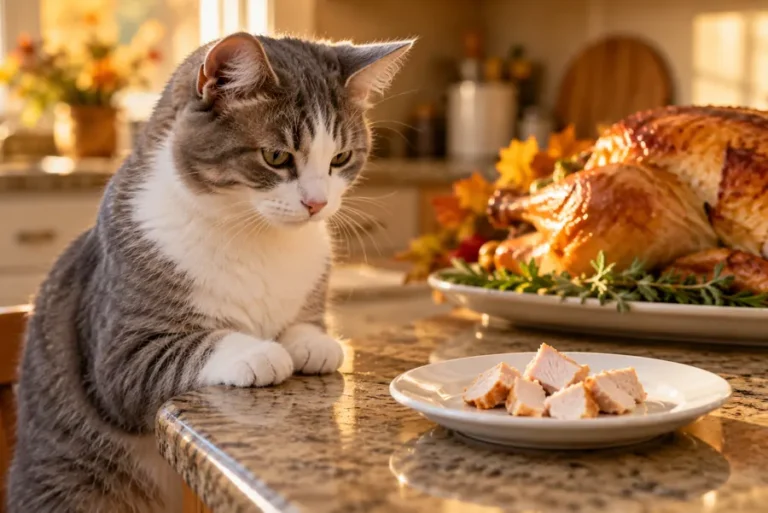
- Plain cooked chicken, with no bones, skin, or seasoning
- Plain cooked turkey, which we cover in our guide on whether cats can eat turkey
- A little plain cooked egg
- A vet-approved commercial cat treat
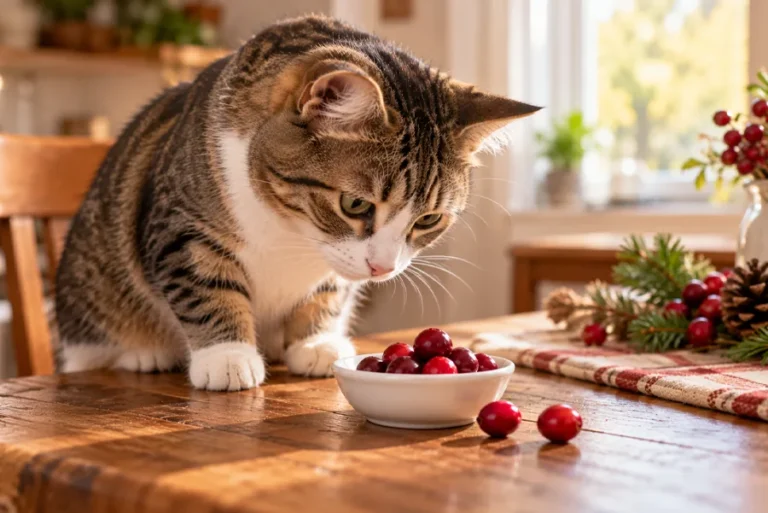
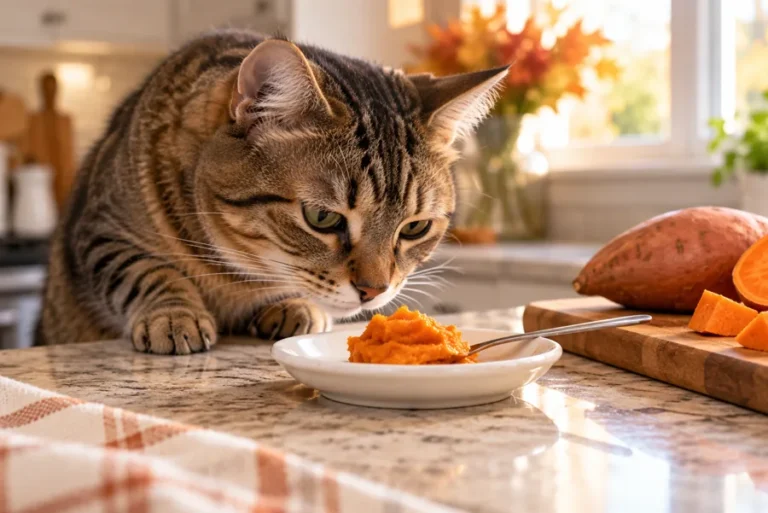
Webvet itself lists plain cooked chicken, turkey, or a little cooked egg as alternatives, counted within the treat allowance. Very small amounts of plain cooked sweet potato are another option for some cats, as we explain in our guide on whether cats can eat sweet potato. If you want to know about another holiday fruit, see our guide on whether cats can eat cranberries.
Keeping Cats Safe on Ham Day
Holiday dinners are chaotic, and a cat only needs a moment. A few habits help:
- Keep the ham covered and away from the edge of the counter
- Clear plates quickly and bin the bones, string, and foil in a closed bag
- Do not leave ham out for hours
- Ask guests not to slip food to the cat
- Give your cat a quiet room with a toy while the family eats
Signs of Trouble
Contact your vet if your cat shows:
- Vomiting or diarrhea
- Loss of appetite
- Lethargy or weakness
- Unusual thirst
- Belly pain, hiding, or hunching
- Trouble breathing or any sign of choking
Frequently Asked Questions
Can cats eat ham every day?
No. Ham is salty and fatty, and it is not part of a complete cat diet.
Can cats eat ham slices from the deli?
It is better to avoid them, because deli ham is often high in sodium.
Can cats eat ham bones?
No. Bones are a choking and obstruction hazard.
Can cats eat ham fat?
It is best to avoid it. Dr. Vetter advises avoiding the fattier pieces.
Can cats eat honey baked ham?
Not recommended. Glazes add sugar and sometimes other ingredients that are not good for cats.
Can kittens eat ham?
Ask your vet first. Kittens do best on complete kitten food.
The Bottom Line
So, can cats eat ham? A tiny piece of plain, cooked ham is unlikely to harm a healthy cat, but vets mostly advise against it because of the fat and salt. Choose plain chicken or turkey instead, and keep the glazed, deli, and bone-in versions away from your cat.
If your cat has a health condition or ate something with a risky ingredient, call your vet.
This article is general information and not a substitute for veterinary care. If your cat is unwell, contact a veterinarian right away.