
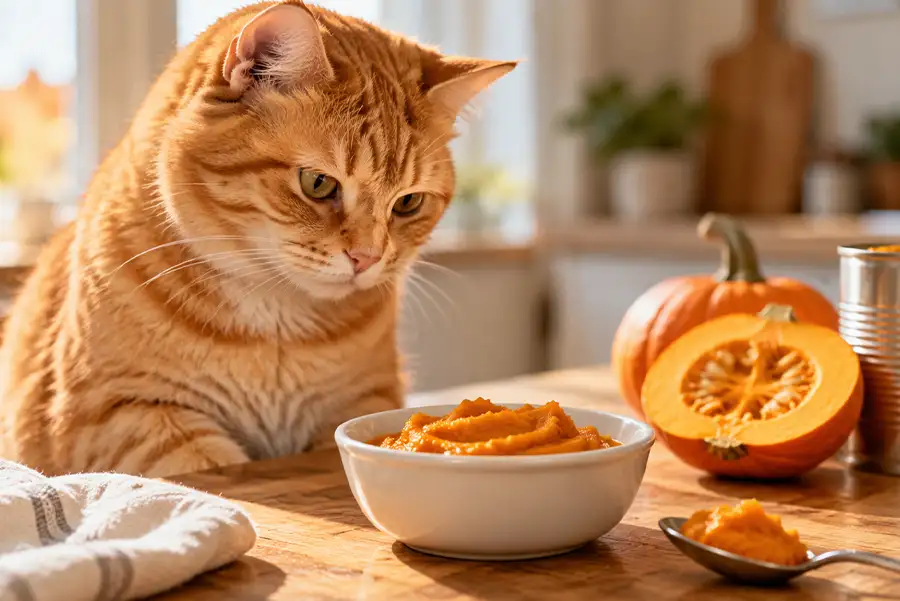
Can cats eat pumpkin? Yes. Plain pumpkin is safe for most cats in small amounts, and it’s one of the few “people foods” that vets bring up again and again. The catch hides in the word plain. A spoonful of unsweetened canned pumpkin and a slice of pumpkin pie look related on the kitchen counter, but for a cat they are two very different foods.
This guide goes through every form your cat is likely to run into this fall: puree, cooked chunks, seeds, the stringy insides, pie and pumpkin spice. You’ll also see how much people actually give, why the vet sources don’t agree on one number, and the situations where a can of pumpkin is the wrong fix and a phone call to the vet is the right one.
I’m a writer, not a veterinarian. Everything below comes from published veterinary and poison-control sources, which are linked at the end so you can read them yourself.
Short answer: Plain cooked pumpkin or 100% canned puree is fine in small amounts. Seeds aren’t toxic, but only a few, crushed and unsalted. Pie, pie filling and anything with pumpkin spice should stay away from your cat. If your cat has diarrhea or can’t poop, call your vet before you open the can.
Table of Contents
Which kinds of pumpkin are okay for cats?
Most of the confusion comes from “pumpkin” meaning five different things. Here’s how they sort out.
| Form | Verdict | What to know |
|---|---|---|
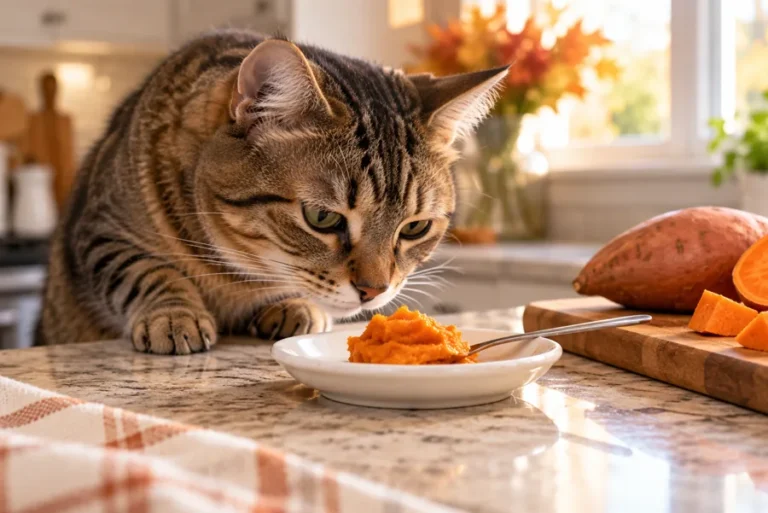
| Plain canned puree (100% pumpkin) | Yes, small amounts | The label should list pumpkin and nothing else. |
| Plain cooked pumpkin | Yes, small amounts | Steamed or roasted, then mashed. No butter, salt, oil or seasoning. |
| Raw pumpkin | Skip it | Hard and fibrous. The sources I read talk about cooked pumpkin, not raw chunks. |
| Seeds | A few at most | Not toxic, but a choking and blockage risk in larger amounts. |
| Pie or pie filling | No | Sugar, spices and sometimes much worse ingredients. |
| Pumpkin spice treats and drinks | No | Spices, sweeteners and caffeine do the damage, not the pumpkin. |
Pumpkin itself isn’t a feline toxin. According to PetMD, plain pumpkin even brings some fiber, potassium and a few vitamins. But cats are obligate carnivores, which is a fancy way of saying their bodies are built to run on meat. So think of pumpkin as a side note on the plate, never the meal.
Why does everyone recommend pumpkin for cats?
Fiber. Pumpkin is full of it, and fiber soaks up water and adds bulk to stool. That’s why the same orange spoonful can be suggested for a cat with loose stool and for a cat that’s backed up. It pulls the digestive system toward the middle.
That’s also where a lot of web articles get carried away. WebVet is pretty blunt: pumpkin is not a cure-all for hairballs, diarrhea or constipation. For a constipated cat that is well hydrated and has been checked by a vet, fiber can help. For a dehydrated cat, extra fiber can actually make a blockage worse. Constipation has plenty of possible causes, including pain, kidney disease, medications and a swollen colon, so a spoonful of pumpkin may cover up a problem instead of solving it.
In other words, the food is harmless. The reason you’re reaching for it is what deserves a second look.
How much pumpkin can a cat have?
Here’s the honest answer: the experts don’t agree, and one of them says there’s no solid dose at all. Compare what three sources say.
| Source | What it says |
|---|---|
| PetMD (written by a veterinarian) | About 2 to 4 teaspoons of canned pumpkin mixed into canned cat food for mild constipation. For diarrhea, roughly 1 to 4 teaspoons, depending on severity, age, weight and what the vet finds. |
| Petco’s vet Q&A (a vet tech) | About 1 teaspoon of plain canned pumpkin per 10 pounds of body weight, once or twice a day, mixed into food. |
| WebVet | No evidence-based dose exists. A vet should decide whether fiber suits your cat, which form, how much and for how long. |
A few things hold true across all of them. Mix it into wet food, because the extra water helps. Keep fresh water available. If the litter box gets looser, cut back. And if you’re only offering a lick as a treat, WebVet’s reminder helps: treats of all kinds should stay under 10% of a cat’s daily calories.
If a cat is healthy and simply curious, a small spoonful is a reasonable place to start. If you’re using pumpkin for a symptom, get a number from your own vet. A 6-pound senior cat and a 14-pound young cat are not the same math.
What to look for on the can
This is the part that trips up careful owners. Two cans sit side by side on the shelf, both orange, both with a pumpkin on the label. One is puree and one is pie mix. Before it goes in the cart, run through this:
- The ingredient list says pumpkin, and only pumpkin. “Pumpkin puree” or “100% pure pumpkin” is what you want.
- It does not say “pie filling” or “pie mix”.
- No sugar, syrup, sweeteners, salt or spices anywhere in the list.
- No “natural flavors” tucked in at the end.
- Once opened, the can goes in the fridge, and anything that smells off or grows mold goes in the trash. WebVet makes this point for opened puree.
Pumpkin seeds
Seeds aren’t poisonous, but they aren’t a free snack either. PetMD says they can cause choking, and in larger amounts they can block the intestines. If you want to offer them anyway, keep it to a few, crushed or mashed, with no salt, oil or seasoning. Sprinkling a bit over canned food works better than handing a cat a whole one.
If your cat swallowed a lot of seeds, PetMD’s advice is to call your vet. The worry isn’t poison. It’s a blockage, and blockages are the kind of problem that gets worse by the hour.
Pumpkin pie and pumpkin spice
Here’s where the pumpkin conversation turns serious. The pumpkin in a pie is the safest ingredient in it.
The ASPCA points to nutmeg as the main concern in pumpkin spice. In large amounts it can cause vomiting, agitation, a racing heart, wobbly walking and even hallucinations. Pet Poison Helpline explains why: nutmeg contains a compound called myristicin. The same page flags cloves and allspice for eugenol, which can damage a cat’s liver, and says large amounts of cinnamon can cause vomiting, diarrhea and irritation of the mouth and lungs.
To be fair, the tiny amounts in a typical spice blend are usually harmless. The danger is concentrated forms, like essential oils or a cat that gets into the spice jar itself, and everything else in the dessert. Pie crust and filling can bring sugar, fat, dairy and salt, and baked goods sometimes contain raisins, chocolate, macadamia nuts or the sweetener xylitol. WebVet adds that if your cat does get into something, you should hold on to the label or recipe and estimate how much was eaten.
So what if your cat gets a lick of the whipped cream off a pie? According to PetMD, a small lick is likely harmless. A bigger helping is a reason to call your vet. When in doubt, call.
Pumpkin guts, jack-o’-lanterns and other fall hazards
Carving season brings a few extras that don’t show up in most pumpkin articles.
- The stringy insides. It’s the same plant, and none of the sources I read single it out as toxic. It’s slimy, messy and not something to serve on purpose. Keep it in the trash, and keep the trash lid closed.
- Decorative pumpkins. WebVet notes that ornamental pumpkins can be painted, treated or contaminated, so they aren’t snack food.
- Pumpkin bread and muffins. Same rule as pie: sugar, spices, and sometimes raisins or nuts.
- Candles inside jack-o’-lanterns. Not a digestive risk, but a curious cat and an open flame are a bad pairing.
When pumpkin isn’t the answer
Pumpkin is a kitchen-cabinet fix. Some symptoms need a professional instead. WebVet lists these as reasons to get your cat seen: repeated vomiting, not eating, weight loss, belly pain, unusual tiredness, a bloated belly, blood, being unable to pass stool, or diarrhea that keeps going.
One more deserves its own line. If a cat, especially a male cat, keeps going to the litter box and nothing comes out, that can be a urinary problem rather than constipation. WebVet says it needs prompt assessment, so don’t wait to see if pumpkin helps.
A small notebook habit helps your vet too. Jot down litter box visits, what the stool looks like, how much your cat is eating and drinking, and any medications. It takes a minute a day and makes the appointment far more useful.
Quick checklist before you serve pumpkin
- It’s plain: 100% pumpkin, no extras.
- You’re offering a small spoonful mixed into wet food.
- Fresh water is out.
- You’re not treating a symptom without a vet’s okay.
- Spices, pie, bread and sweet baked goods stay out of reach.
- Seeds, if any, are a few, crushed and unsalted.
Frequently asked questions
Can cats eat pumpkin every day? The sources I read describe pumpkin as part of a plan for specific problems, not a daily supplement for every cat. If your vet wants it long term, they’ll tell you how much.
Can kittens eat pumpkin? None of the sources I checked cover kittens specifically. Ask your vet first, since kittens have smaller stomachs and different needs.
Is pumpkin good for hairballs? Not reliably. WebVet says pumpkin isn’t a cure-all for hairballs. Repeated retching with no hairball can point to another illness, so mention it to your vet.
Can cats eat pumpkin pie? No. A small lick is likely harmless, according to PetMD, but pie contains spices, sugar and fat that a cat doesn’t need. If your cat ate more than a lick, call your vet.
Can cats eat pumpkin seeds? They aren’t toxic, but they can choke a cat or cause a blockage in larger amounts. If you offer them, keep it to a few, crushed, with no salt or oil.
What should I do if my cat ate something with nutmeg? Call your vet, the ASPCA Animal Poison Control Center at (888) 426-4435, or Pet Poison Helpline at 1-800-213-6680. These services may charge a consultation fee. Have the label or recipe ready.
The bottom line
Pumpkin is one of the friendlier fall foods for a cat, as long as it’s plain, cooked and small. Check the can, skip the pie, and treat it as a side dish. If you’re reaching for it because something is wrong in the litter box, let your vet make that call first.
Looking for more cat food answers? Try our guides on dates, applesauce and bananas.
This article is for general information. It isn’t veterinary advice, and I’m not a veterinarian. If your cat seems unwell, call your vet or an emergency clinic.
Sources
- PetMD: Can Cats Eat Pumpkin? (written by a veterinarian, last updated October 2022)
- WebVet: Can Cats Eat Pumpkin?
- Petco: Cat constipation, pumpkin, food and diarrhea questions answered
- ASPCA: When pumpkin spice is not so nice
- Pet Poison Helpline: Pumpkin spice, naughty or nice?